

- Español
- Hindi
- Marathi
- Kannada
- 中文 (简体)
- Français
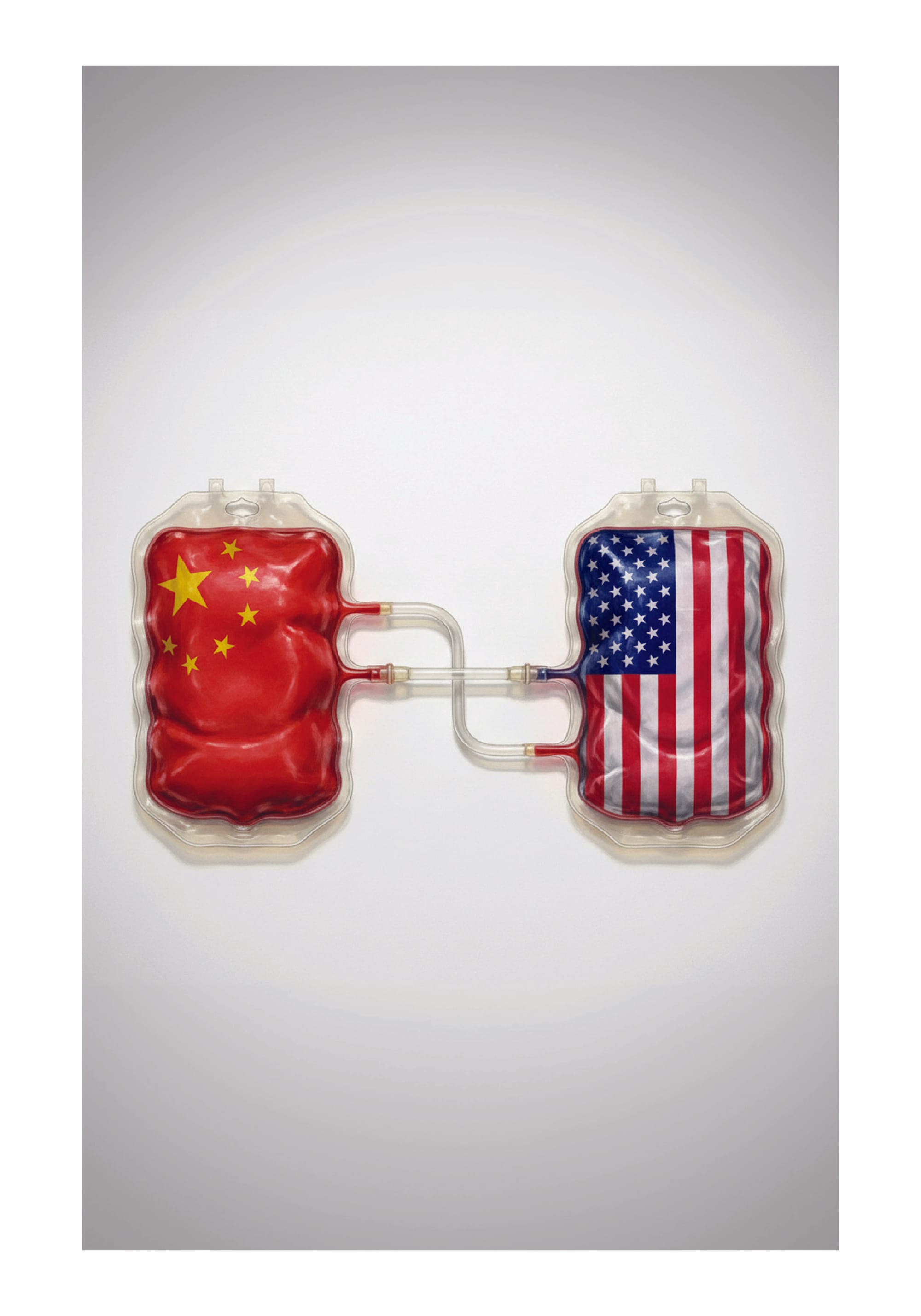
China’s Science and Technology (S&T) ecosystem has undergone sweeping changes in recent years. It also raises one critical question: despite the United States cutting federal research funding underpinning S&T, how has China continued to expand its research and development ecosystem? One answer to this lies in China’s intent of centralised administrative control, and its organised research. “New Quality Productive Forces”, a concept proposed by Xi Jinping himself in the year 2023, is seen as a national strategy to uplift industrial modernisation through science, research and technological innovation.
This approach of China is now shifting the global balance of research power and positioning China as a powerful competitor to the United States in various fields ranging from artificial intelligence (AI), renewable energy, biomedicine and other sciences. With the establishment of the Central Science and Technology Commission (CSTC), China aims to coordinate the nation’s entire science and technology agenda and also to oversee agencies like the Ministry of Science and Technology (MOST) and the National Natural Science Foundation of China (NSFC), aligning with national goals. Even the Ministry of Education (MOE) integrates the Chinese Communist Party to link academia with the national missions.
The Scale of China’s Research and Development Surge
Data shows that between 2012 and 2023, China’s gross domestic expenditure on research and development rose by 224% – almost double the United States’ increase of 120%. The National Bureau of Statistics reports R&D funding exceeded 3.6 trillion yuan (£496 billion) in 2024, a significant 8.3% increase compared to 2023.
This surge is due to many factors: policy interventions supporting R&D innovation, diversified investment, and the increased role of enterprises contributing well to this surge. One of China’s key focuses is intramural R&D – research conducted in government labs under direct state control. This is unlike the United States, where most research funding is channelled through universities and the private sector. China’s reliance on the intramural ecosystem fosters self-reliance and reinforces the civil–military integration of technologies, keeping commercial and defence innovation both at par.
According to a recent study, China is now home to high-level science and technology experts. Between 2020 and 2024 the number of leading scientists in China increased from 18,805 to 32,511, raising its percentage from 17% to 28%. On the other hand, the United States saw a drop from more than 36,599 to 31,781 in 2024. Researchers in such high numbers publishing influential papers in leading international journals reflect Chinese strength in not just quantitative but qualitative terms.
China’s growing global research output in indexed journals is also rising sharply. According to data from the Nature Index 2024, 7 out of the 10 top institutions for contributions are based in China, publishing in high-quality natural and health science journals. China is also the leading country for research output in chemistry, earth, environmental and health sciences.
Another factor is organised scientific research and the mobilisation of resources within China. The programme launched by the Ministry of Education (MOE) called “Organised Research” in 2022 is an important feature of scientific research funding, aligning China’s universities with national strategic priorities. This approach focuses on cross-institutional collaboration, technological self-reliance, resource mobilisation, directing funds, and infrastructure development.
To scale academic research in areas such as quantum, artificial intelligence, and brain science, China has operated over 300 State Key Laboratories (SKLs) since 2022 with centralised funding and clear mandates.
Despite global geopolitical tensions, and tech rivalry especially between the US and China, and despite US efforts at decoupling, China keeps an open eye to international collaboration through strict supervision and alignment with national interests. Many researchers working abroad also play key roles in China’s government labs. However, this centralised system has its own challenges. While big projects receive huge funding, individual researchers face tighter competition for resources. The National Natural Science Foundation of China (NSFC), one of the biggest funders of basic research, under MOST, has seen a huge surge in applications, far above the increase in spending. For example, in 2024 the total funds for NSFC increased by 6.3% compared to 2023, but applications rose by 26.36%. NSFC is therefore looking for more joint funding with government and enterprises.
Another challenge is connecting academic innovation to the market. While Chinese universities lead the world in patent filings, fewer than 5% of academic patents are commercialised compared to 54% in the United States. To improve this, China is investing more in start-ups, technology transfer, and improving hiring quality. Another problem is fragmentation of work and funding. Some programmes, such as those on carbon neutrality, require collaboration between departments, but government funding often flows to conventional academic departments. To move further, overemphasis on government-preferred priorities sometimes comes at the expense of grassroots innovation.
Innovation at a Crossroad: America’s Retreat and the Rise of the Global South
While China’s centralised surge transforms its R&D ecosystem, the US is witnessing the opposite trend. On a dreary February morning in Washington, scientists gathered in labs and institutions to absorb the startling news that the federal budget for 2026 proposed a 40% cut to NIH and a 57% cut to NSF. For many, it felt like watching the earth crumble under years of diligent work.
This was not how the tale of American science was meant to unfold. The United States once supported the biotech and computer revolutions, sent men to the moon, and spent about 2% of its GDP on research. Government investment in R&D is now at a 70-year low of 0.6% of GDP, and that foundation is in danger.
For a long time, economists have argued that research and development is an investment rather than a cost. Jones and Summers (2020) argue there is around £5 in long-term GDP for every £1 invested in research. The most recent data from Fieldhouse & Mertens (2025) strengthens the argument even more: shocks to government R&D investment have a direct causal impact on productivity growth and produce gross social returns ranging from 150% to 300%.
These returns are not abstract; they are responsible for the mRNA vaccine, GPS, and the internet. However, the benefits are not obvious in short-term budget debates since they are unpredictable and long-term.
Twenty to twenty-five per cent of the rise in private-sector productivity after World War II came from federal R&D (Jaffe & Jones, 2015). This is supported by econometric data from Fieldhouse & Mertens (2025), who show that a slowdown in public R&D considerably reduces productivity growth. Put another way, federal grants and labs are more than just funding documents; they subtly drive improvements in company efficiency across the economy.
However, these spillovers have decreased since the 1970s as US support has stalled. The decline in national productivity is a result of both automation and globalisation, as well as withdrawal from the very investments that spark innovation.
This re-alignment is occurring in the Global South as Washington retreats. Researchers in Africa, Asia, and Latin America are forming south–south alliances, chasing different funding streams, and demanding to dictate research agendas, as noted by Sindi (2025) in The Great Funding Shift. Ironically, while historically under-resourced systems are experimenting with resilience, the world’s richest nation is retreating. These nations can seize the chance to shape global research in their own ways if the United States fails.
American lay-offs carry significant risks. Advanced biology, AI, and quantum computing are not ancillary topics; they are the economic battlegrounds of the twenty-first century. Applications may be built by private firms, but the underlying, speculative science is only supported by public funding. According to Fieldhouse & Mertens (2025), cuts risk destroying the spillover structure that supports sustained production. On the other hand, rivals are moving forward: since 2000, China’s R&D share of GDP has quadrupled, while the EU is still expanding (OECD, 2023).
If the evidence is so compelling, why cut? The explanation is politics. Anecdotes—fruit fly experiments that seem absurd, or discoveries dismissed as frivolous—are used to evaluate research. However, history suggests the two are connected: revolutionary innovations are usually sown by unannounced initiatives. Science’s greatest strength is its unpredictability.
Its advancements are due to ambiguity, not despite it. Reducing funding because impacts are incalculable is a miscalculation of what makes discovery so powerful.
Those who were formerly on the periphery are trying to seize the lead, while a nation built on invention is disinvesting. The differences are striking. Although under threat, America’s golden goose is still alive. Meanwhile, the Global South is subtly crafting its own story of resilience.
Conclusion
Thus, to strengthen the innovation ecosystem in China would mean better recognition of individual contributions within the larger framework, more incentives for interdisciplinary collaboration, and learning from the UK model of the Research Excellence Framework, which considers research impact on society rather than simply counting publications. For many years, China focused on becoming the manufacturing hub for its economic growth. Now, however, it has shifted to innovation, technology and research-driven development. Indeed, China’s R&D expansion—the backbone of innovation—is reshaping global innovation through centralised coordination, rising investment in projects, growing talent, and industry collaboration. Yet it is equally important to balance political vision with academic creativity and grassroots research.
At the same time, America faces the danger of undermining the very system that built its global leadership in science and technology. The golden goose of US innovation is at risk, even as China and the Global South push ahead. Whether science will shape the future is no longer a question. It will. Who will drive it, who will pay for it, and who will gain from it are the real questions.