- Español
- Hindi
- Marathi
- Kannada
- 中文 (简体)
- Français
Introduction
The Chinese fascination with a well-told tale is the stuff of legend and a national Myth. It has shaped Chinese relationships with the world and between themselves. Long before the vocabulary of nationalism arrived in East Asia, Chinese rulers, scholars, and commoners alike were already using myths, histories, and popular tales to distinguish “China” from the rest of the world. These narratives established not only who the Chinese were, but also what values they were meant to uphold and how they should respond to outsiders. Heroes from earlier dynasties, mythic ancestors, and even outlaws were suddenly reframed as symbols of resistance, loyalty, and cultural resilience.
Tracing the evolution of storytelling in relation to Chinese nationalism allows us to see continuity where political ruptures might suggest only breaks. The dynasties changed, the medium shifted, from oral traditions to printed novels, from revolutionary operas to web fiction, but the fundamental practice remained the same. The story of the Yellow Emperor (Huangdi) unifying the tribes in 221 BC became the foundation of a collective ancestry. The loyalty of Yue Fei in the Song dynasty was revived as an example of patriotic resistance against foreign invasion. The tragic follies of Lu Xun’s “Ah Q” symbolised the urgency of shaking off spiritual weakness in the early twentieth century. Maoist propaganda tales presented the heroic sacrifice of ordinary peasants and soldiers as the embodiment of national strength. In the twenty-first century, patriotic blockbusters like Wolf Warrior or The Battle at Lake Changjin continue the pattern, dramatising China’s humiliations and triumphs for domestic audiences.
This long trajectory is not accidental. As Brett Hinsch has argued, the roots of Chinese nationalism lie much deeper than the conventional account of a nineteenth-century import from the West. The symbolic repertoire for imagining the nation was already present in classical myths, Confucian historiography, and the civilizational worldview that placed China at the centre of “All Under Heaven.” When the shocks of imperialism and internal decline hit, these older stories were refashioned into new nationalist narratives. At the same time, as Neil Munro shows through a strategic-culture lens, contemporary Chinese nationalism is structured by historical storytelling that shifts between humiliation and pride, order and freedom, equality and development. In other words, the stories Chinese people tell about their past continue to shape both their national identity and their political imagination today.
This article traces how storytelling has shaped Chinese nationalism and state identity from myth to the digital age. Early creation tales and heroic legends laid the groundwork for collective belonging, while imperial novels and operas reinforced cultural unity. In the late Qing and Republican eras, fiction and essays stirred national consciousness, and under Mao, stories were recast for revolutionary mobilisation. The reform era revived pluralism, drawing on older themes of humiliation and renewal in new literary and cultural forms. Today, storytelling flourishes across science fiction, comics, television dramas, memes, and video games, remaking ancient myths and historical figures for digital audiences and embedding them in China’s global ambitions. Across these transformations, storytelling has not simply reflected nationalism but actively produced it, ensuring that the nation is experienced as a shared narrative continually retold across generations.
Myth and the Cultural Origins of Chinese Identity
If one stands in Tiananmen Square today and looks at the murals that flank the entrance to the Forbidden City, images of dragons, phoenixes, and heroic ancestors still hover in the background. These motifs are not arbitrary decoration. They draw on stories that reach back thousands of years, to a time before China was a nation-state, when communities along the Yellow River told tales of creation, cosmic order, and heroic leaders. These myths are not relics of a forgotten age; they continue to function as a catalyst for the Chinese Identity.
The creation story of Pangu is a useful starting point. In the account preserved in Chinese Mythology (1999) and popularised in Chinese Mythology 101 (2021), Pangu was the giant who cleaved heaven from earth and whose body became the natural features of the world. His death was not an end but a transfiguration: his eyes became the sun and moon, his breath the wind, his blood the rivers. Modern scholars such as Lihui Yang emphasise how this myth, while cosmological, also encoded an early vision of unity. The Chinese world is literally imagined as the body of a single progenitor. In contemporary China, this metaphor resonates strongly when textbooks speak of the “body of the nation” or the Communist Party frames itself as the heart sustaining 1.4 billion people; the echoes of Pangu are unmistakable.
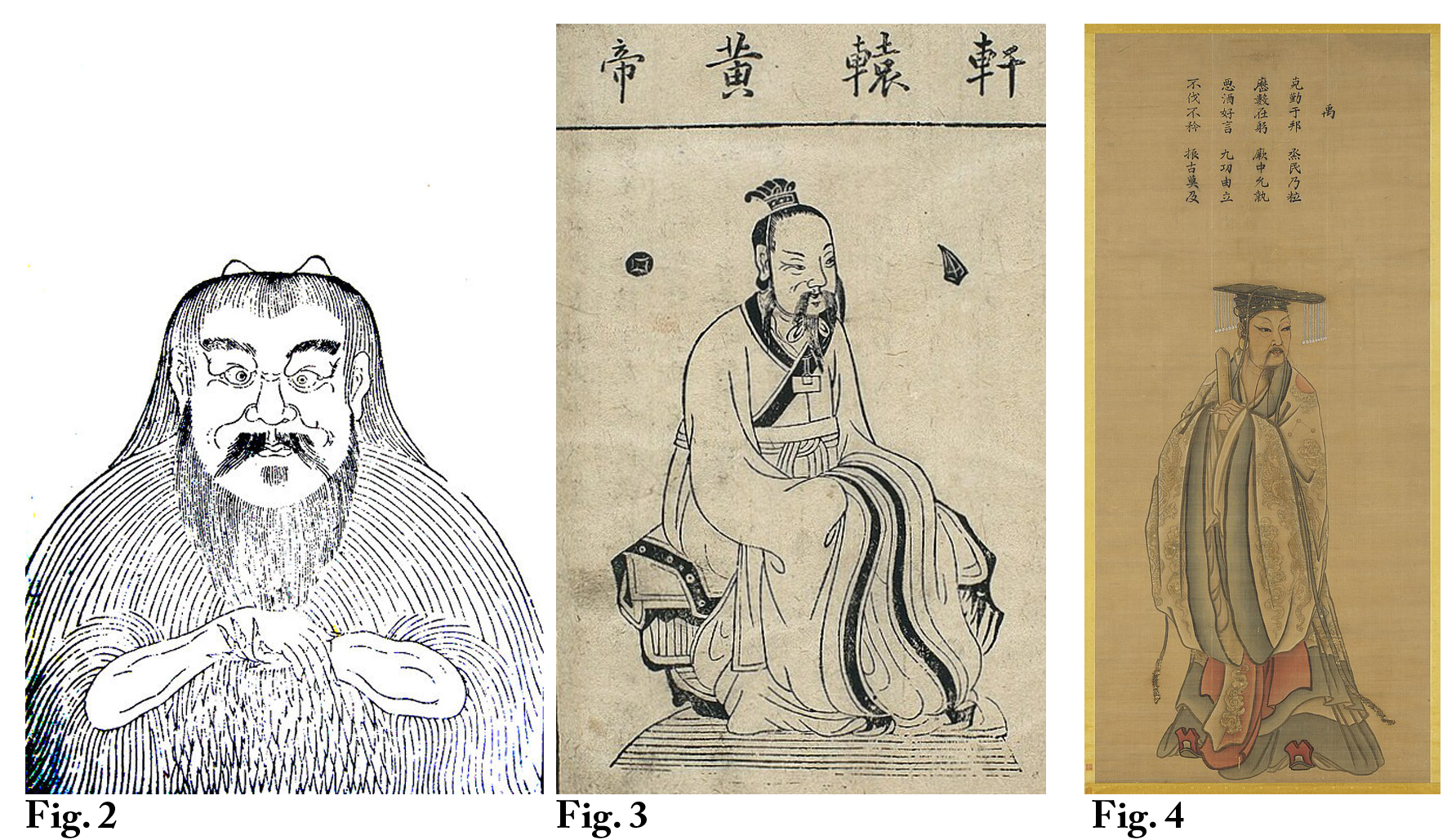
If Pangu provided a cosmic backdrop, the Yellow Emperor (Huangdi) offered ancestry. Myths collected in Chinese Mythology describe him as the leader who defeated the Yan Emperor at the Battle of Zhuolu, unifying disparate tribes into one polity. He is also credited with inventing writing, medicine, and the compass. Chinese historians stitched myths into history, creating the sense of an unbroken line of rulers stretching back to mythical antiquity. The political potency of this myth endures: as recently as 2009, thousands of Chinese officials and citizens gathered at Huangling in Shaanxi province to honour the Yellow Emperor as the “ancestor of the nation.” What began as a tribal legend was thus mobilised into a nationalist ritual.
Equally enduring is the story of Yu the Great, the flood-controlling hero of early China. In Chinese Folktales, Yu’s tale is retold with emphasis on his tireless labour: he spent thirteen years diverting rivers and dredging canals, passing by his own home without entering, so devoted was he to the task. His eventual success made him the founder of the Xia dynasty. For ancient audiences, Yu’s triumph represented order conquering chaos; for later generations, he came to embody the sacrifice of the leader for the survival of the people. Modern parallels abound. The Communist Party often describes itself as “taming the floods” of poverty, corruption, or foreign aggression. In 1998, when the Yangtze River overflowed and soldiers were photographed forming human chains to block the waters, state media explicitly invoked Yu’s myth, reminding citizens that China had always overcome the fury of nature through collective will and heroic leadership.
These myths were not left as folklore; they were canonised. Sima Qian’s Shiji transformed oral legends into historiography, rationalising them into a continuous narrative of Chinese civilisation. Bret Hinsch stresses that this historiographical tradition fostered a sense of collective time, an unbroken line of rulers stretching back to mythical antiquity. This continuity is essential to nationalism. When modern China claims to be a five-thousand-year-old civilisation, it is invoking not just history but also these mythic stories, which were woven into the very fabric of the national past.
The persistence of myth in modern politics suggests that these stories function less as superstition and more as symbols of belonging. Huangdi becomes a shared ancestor in diaspora communities, Yu a model for leaders in times of crisis, and Pangu a metaphor for unity in diversity. Munro reminds us that Chinese identity is often told through narrative tensions, humiliation versus pride, chaos versus order.
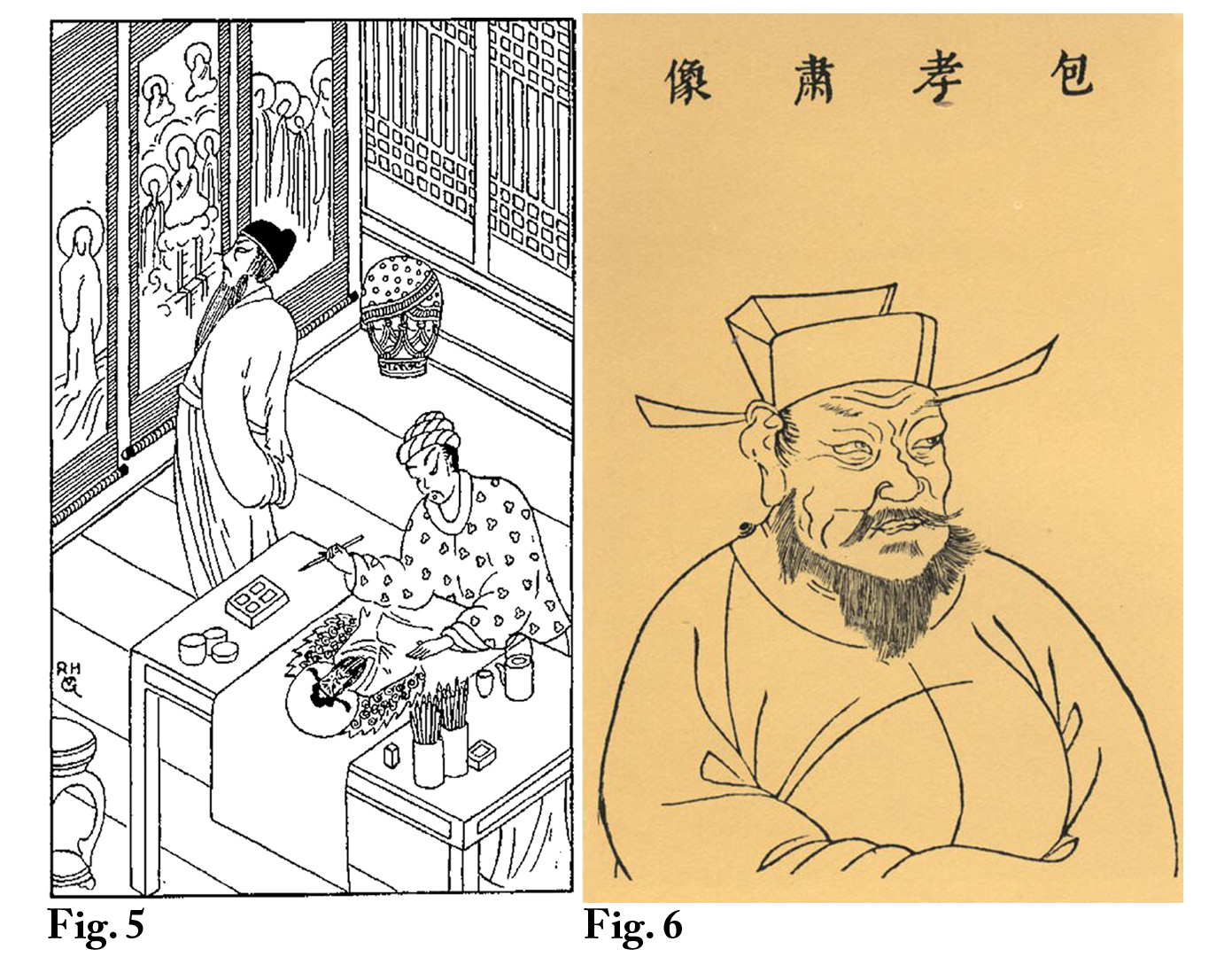
If the myths of Pangu, Huangdi, and Yu provided cosmic order and ancestral unity, another enduring strand of Chinese storytelling located legitimacy in the courtroom. Among the most celebrated figures was Bao Zheng (999–1062), a Northern Song magistrate renowned for his incorruptibility. Historical chronicles remember Bao for punishing corrupt officials without fear or favour, and popular culture quickly magnified this reputation. From the Yuan dynasty onward, zaju plays and later Ming–Qing operas depicted Judge Bao as a fearless official exposing treachery at court, often confronting emperors and powerful families alike. Over time, he acquired recognisable visual attributes; his jet-black face and crescent moon forehead mark became shorthand for unbending impartiality on stage. These tales circulated widely in printed collections and performances, serving as moral pedagogy: to dramatise Bao’s justice was to remind audiences that order depended on the courage of officials who placed law above power. In modern times, Judge Bao’s persona migrated into novels, films, and television dramas, a continuity that underscores how Chinese audiences continue to prize stories where justice itself becomes a form of cultural inheritance.
If Bao embodied the incorruptible judge, Dee Renjie (c. 630–700) exemplified the detective-magistrate. A Tang official celebrated for his acuity, he was fictionalised centuries later in the gong’an (court-case) genre, where magistrates investigated crimes, interrogated suspects, and restored order through moral judgment. The most influential collection, Dee Goong An (Celebrated Cases of Judge Dee), compiled in the eighteenth century, presents him unravelling complex, interlinked mysteries in ways that upheld both social stability and cosmic balance. These narratives, half-legal case, half-moral allegory, showed readers that good governance was not abstract—it was enacted through stories of investigation and judgment. In the mid-twentieth century, Robert van Gulik, a Dutch diplomat and sinologist, translated Dee Gong An into English and then composed his own Judge Dee novels in the same style, bringing this strand of Chinese storytelling to a global audience. For Chinese readers, Dee remained a moral magistrate; for Western readers, he became a bridge into a different narrative tradition where law and justice were inseparable. Taken together, Judge Bao and Judge Dee illustrate that just as myths of Yu or Huangdi taught unity and sacrifice, judicial tales encoded the equally vital conviction that a legitimate order rested on fairness, probity, and the moral imagination of law.
China’s earliest stories laid down the narrative logic that nationalism would later exploit. Creation became unity, ancestry became common blood, flood control became collective salvation, and judicial tales became moral blueprints for just order. When one hears a twenty-first-century slogan like “The great rejuvenation of the Chinese nation,” it is hard not to think of Yu’s tireless work, Huangdi’s unification, Pangu’s sacrifice, or the incorruptible judgments of Bao and Dee. The figures are ancient, but their storytelling power remains alive, shaping how a modern nation imagines itself.
Crisis and Transformation: Late Qing to Republican Era
In the late nineteenth century, bookstalls in Shanghai and Guangzhou were filled with cheap prints, translations of Jules Verne, accounts of foreign wars, and satirical tales of corrupt officials. Storytelling had entered a new age. What once circulated orally in teahouses or on opera stages was now being disseminated through newspapers, journals, and mass-produced fiction. This was not simply a literary shift; it was a political one. As foreign powers carved up China after the Opium Wars and the humiliating defeats of the Sino-Japanese War (1894–95), the very survival of the country seemed at stake. Storytelling was pressed into service as an instrument of reform, mobilisation, and awakening.
Liang Qichao is emblematic of this transformation. Exiled to Japan after the failure of the 1898 reforms, he poured his energy into writing political fiction. In essays like The Relationship Between Fiction and the Government of the People (1902), Liang argued that novels could “renew the people of a nation” by shaping morals and civic consciousness. Bret Hinsch notes that for Liang, China’s weakness lay not only in its armies but in its imagination. Fiction, he insisted, could cultivate a modern subjectivity, turning passive subjects into active citizens. His own novel, Xin Zhongguo Weilai Ji (The Future of New China), imagined a reformed republic where science, education, and constitutionalism flourished. For the first time, fiction became a deliberate tool of nation-building.
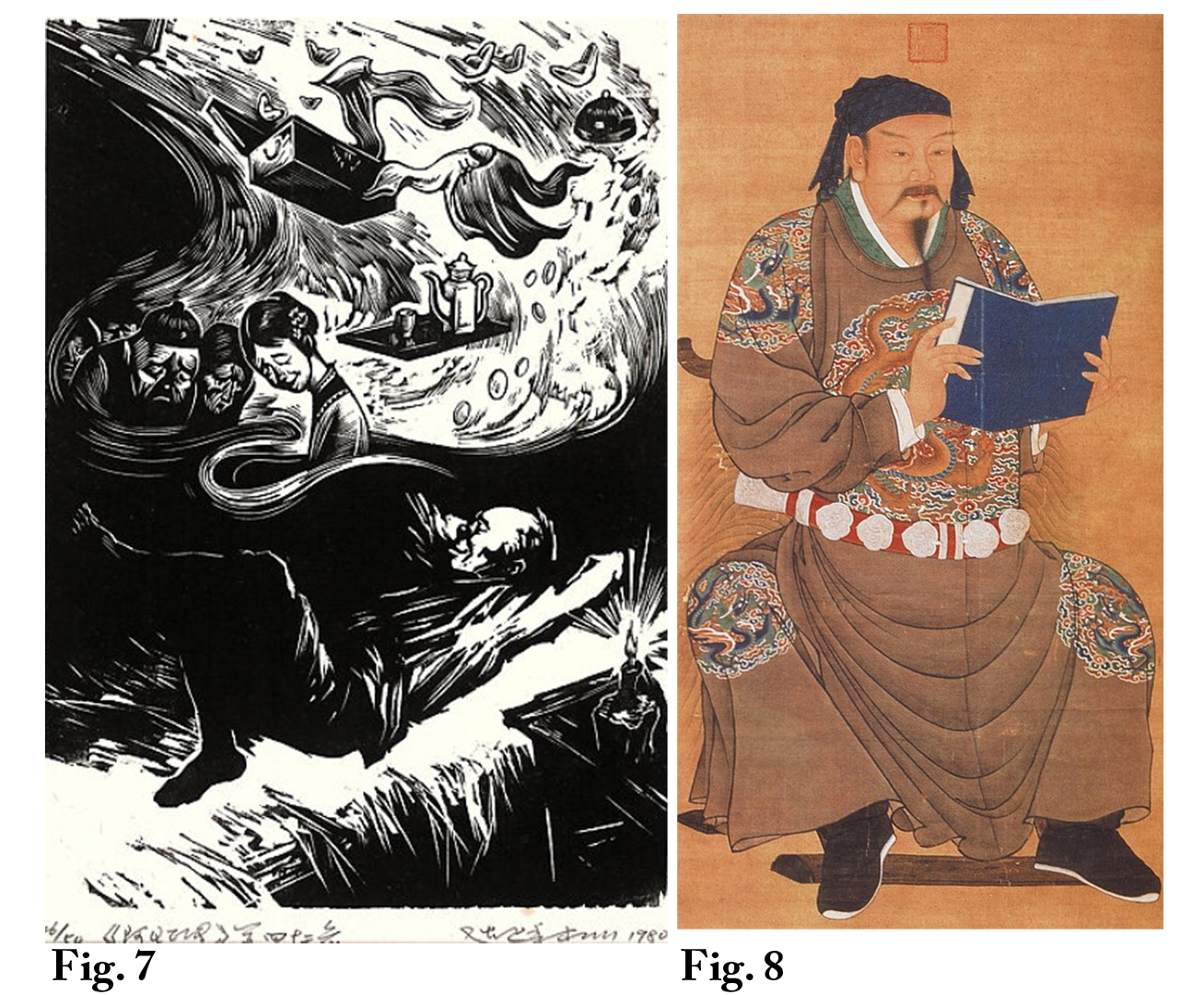
But not all storytelling was utopian. Lu Xun, often called the father of modern Chinese literature, wrote short stories that stripped bare what he saw as the spiritual sickness of the nation. In Diary of a Madman, the protagonist sees the words “Eat people!” scrawled between the lines of classical texts, an allegory of the cannibalistic nature of feudal culture. In The True Story of Ah Q, Lu Xun created a character whose self-deceptive optimism masks his humiliation and ultimate execution. As the book A Companion to Modern Chinese Literature observes, Lu Xun’s stories were not intended to comfort but to shock readers into awareness. He rejected the consoling loyalty of Yue Fei or the unifying grandeur of the Yellow Emperor. Instead, he showed what happens when a people cannot face reality. His stories became part of the May Fourth Movement’s broader call to “destroy the old, build the new.”
At the same time, traditional heroes were reinterpreted for nationalist ends. Yue Fei, once celebrated in operas as a dynastic loyalist, reappeared in late Qing plays as a symbol of resistance to foreign aggression. Zhang points out that Yue’s story was increasingly framed in racial-nationalist terms, his loyalty representing not just service to the Song dynasty but defence of the Han people against outsiders. Similarly, the ancient myth of the Yellow Emperor was revived in public ceremonies. In 1903, reformers began to promote public sacrifices to Huangdi as “the ancestor of the Chinese nation,” a direct attempt to forge ethnic unity.
Print culture also allowed foreign narratives to be appropriated into Chinese contexts. Stories of Western and Japanese modernisation were translated and circulated in journals like Xin Xiaoshuo (New Fiction). Chengcheng You highlights how these translations did not simply transmit ideas but were reframed through Chinese concerns, emphasising collective regeneration, national dignity, and the urgency of reform. In this way, even borrowed stories were naturalised into the nationalist canon.
The flood of translations in the late Qing was more than a literary curiosity; it became a central mechanism through which Chinese writers reimagined both form and content. Translations of Jules Verne, Dumas, and political novels circulated widely in journals such as Xin Xiaoshuo (New Fiction), where stories of invention, social reform, and national crisis were recast through Chinese concerns. Serialised formats and speculative plots offered narrative tools that were quickly absorbed by domestic writers. By adapting these foreign tales to local contexts, translators created what might be called a new narrative repertoire: stories that could dramatise collective weakness, imagine national renewal, or instruct readers in civic virtue. In this way, translation functioned less as imitation than as cultural circuitry, connecting Chinese audiences to global genres while simultaneously remoulding them for national purposes.
This wave of translation also altered the very expectations of what fiction could do. Where earlier stories of heroes like Yue Fei or Yu the Great reinforced continuity, late Qing translations introduced rupture, urgency, and futurity. Liang Qichao’s advocacy of fiction as a tool to “renew the people” was inseparable from the availability of these new forms. Translated detective stories suggested new ways of dramatising justice; political novels imported from Japan supplied models for civic awakening; and speculative romances offered blueprints for scientific modernity. For readers in Shanghai or Guangzhou, encountering these translated texts was not simply to meet Western characters but to see new possibilities for Chinese storytelling itself. By the 1910s and 1920s, the modern Chinese novel had taken shape in part because translation had made it possible to imagine narrative as a vehicle for reform, mobilisation, and nationhood.
The 1920s and 1930s further broadened the field. Storytelling was not confined to elite journals but became a weapon in mass mobilisation. Popular magazines serialised revolutionary tales; films depicted patriotic martyrs; travelling theatre troupes dramatised resistance against warlords and Japanese invaders. Bret Hinsch stresses that nationalism, though a modern political ideology, succeeded in China precisely because it could draw upon older habits of storytelling. The tales of loyal generals, self-sacrificing peasants, and ancestral unity merged with new genres of fiction and reportage to create a nationalist culture that could reach both literate elites and ordinary villagers.
What is striking is the tone of urgency in this period’s storytelling. Where myths reassured and dynastic tales reinforced continuity, late Qing and Republican narratives demanded rupture. They spoke in the voice of alarm clocks, warning bells, even sirens. Lu Xun himself compared his work to “iron houses with no windows” that must be smashed open to let in air. The metaphor captures the mood: China was suffocating, and stories were the means to break through.
What is striking is the tone of urgency in this period’s storytelling. Where myths reassured and dynastic tales reinforced continuity, late Qing and Republican narratives demanded rupture. They spoke in the voice of alarm clocks, warning bells, even sirens. Translations amplified this atmosphere, bringing in foreign forms such as detective plots, speculative romances, and political novels that sharpened the sense of crisis and possibility. A reader encountering Jules Verne in Xin Xiaoshuo or Japanese reformist fiction in a Shanghai journal was not merely consuming imported entertainment but absorbing blueprints for renewal or reminders of vulnerability. Lu Xun himself compared his work to “iron houses with no windows” that must be smashed open to let in air, and the metaphor captures the mood: China was suffocating, and stories, whether born of domestic satire or borrowed from abroad, were the means to break through. By the time the Republic descended again into civil war in the 1940s, storytelling had become firmly embedded as a nationalist tool. Writers, playwrights, and filmmakers no longer regarded their work as ornamental but as existential, for the fate of the nation was at stake in every tale. Yet the resources they drew upon were deeply traditional: myths of origin, dynastic heroes, and moral allegories.The crisis of the nineteenth and early twentieth centuries did not erase older stories but reactivated them, reframing ancient motifs in the new vocabulary of nationhood.
Maoist Nationalism and Revolutionary Storytelling (1940s–1976)
If the early twentieth century rang with alarm bells, the mid-century resounded with marching songs. By the 1940s, as the Communist Party consolidated power through war against Japan and civil conflict with the Nationalists, storytelling was no longer simply a tool of critique or reform. It became an apparatus of mobilisation. The Party understood that to build a new China, it needed not only guns and land reform but also myths, heroes who embodied the revolution, narratives that linked ancient virtue with socialist destiny, and stories that ordinary peasants could recognise as their own.
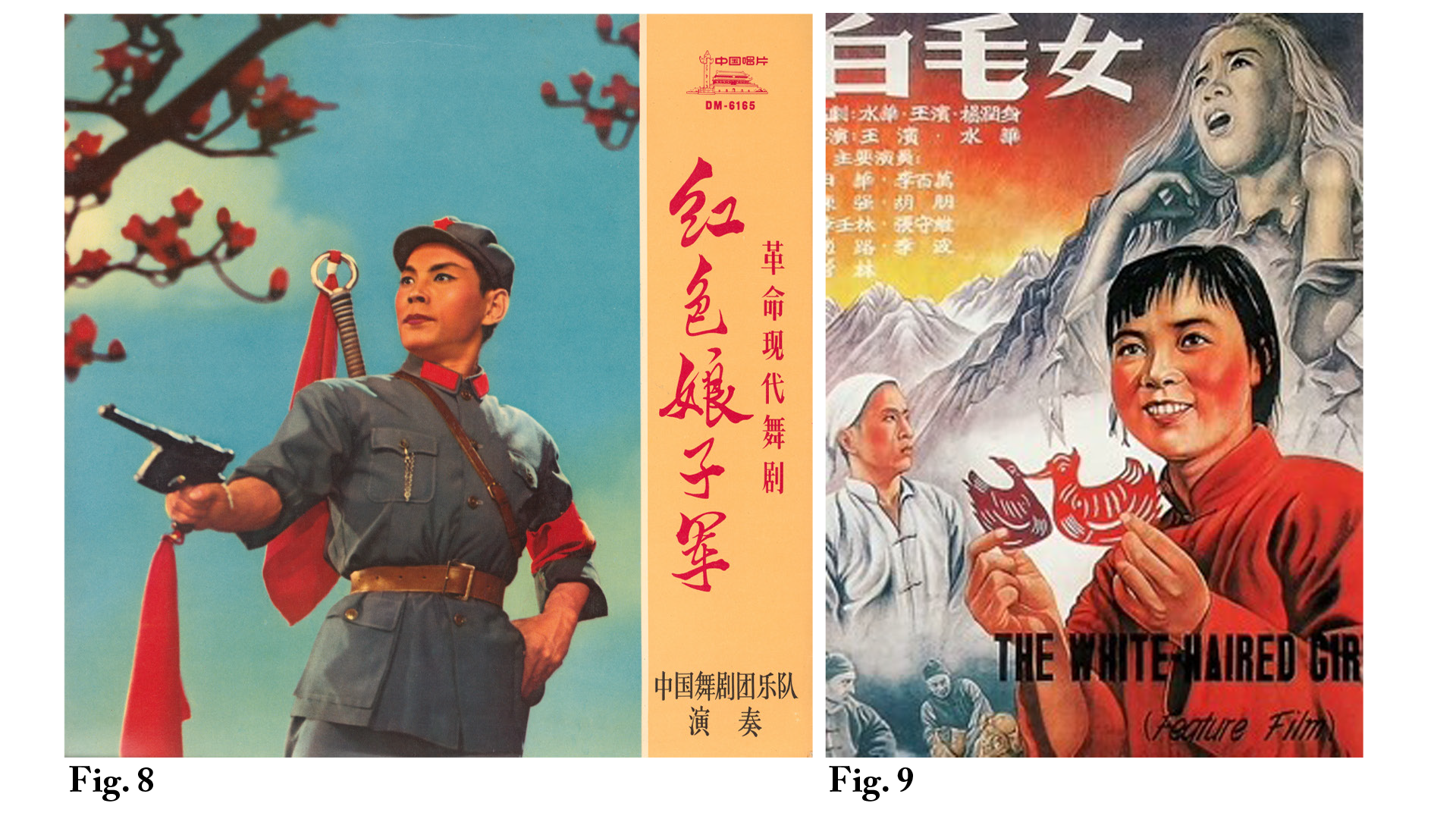
A striking example is the creation of the “Red Classics”, a canon of revolutionary tales disseminated through novels, operas, and films. Works like The Red Detachment of Women (1961) told of peasant girls who broke their chains and joined the Communist struggle, while The White-Haired Girl (1945, revised 1950) transformed a story of feudal exploitation into a socialist allegory of liberation. As Chengcheng You notes, these works were designed with a dual purpose: to stir emotion and to instruct. Audiences were not passive consumers but participants in the revolutionary process. Villagers wept when the White-Haired Girl triumphed over her landlord, because her suffering echoed their own, reframed in a nationalist-socialist key.
The figure of Lei Feng captures the Maoist transformation of storytelling into myth-making. A young soldier who died in 1962, Lei was posthumously turned into a paragon of selfless devotion to the Party. State media published his diary, filled with lines such as “Serve the people with all my heart.” Schools, factories, and neighbourhood committees were instructed to “Learn from Comrade Lei Feng.” Zhang points out that the Lei Feng story was consciously mythologised: his face became iconic, his deeds exaggerated, his name shorthand for socialist virtue. Much as Yue Fei once symbolised loyalty to the Song, Lei Feng became the moral exemplar of Maoist nationalism, loyal not to a dynasty but to the people and the Party.
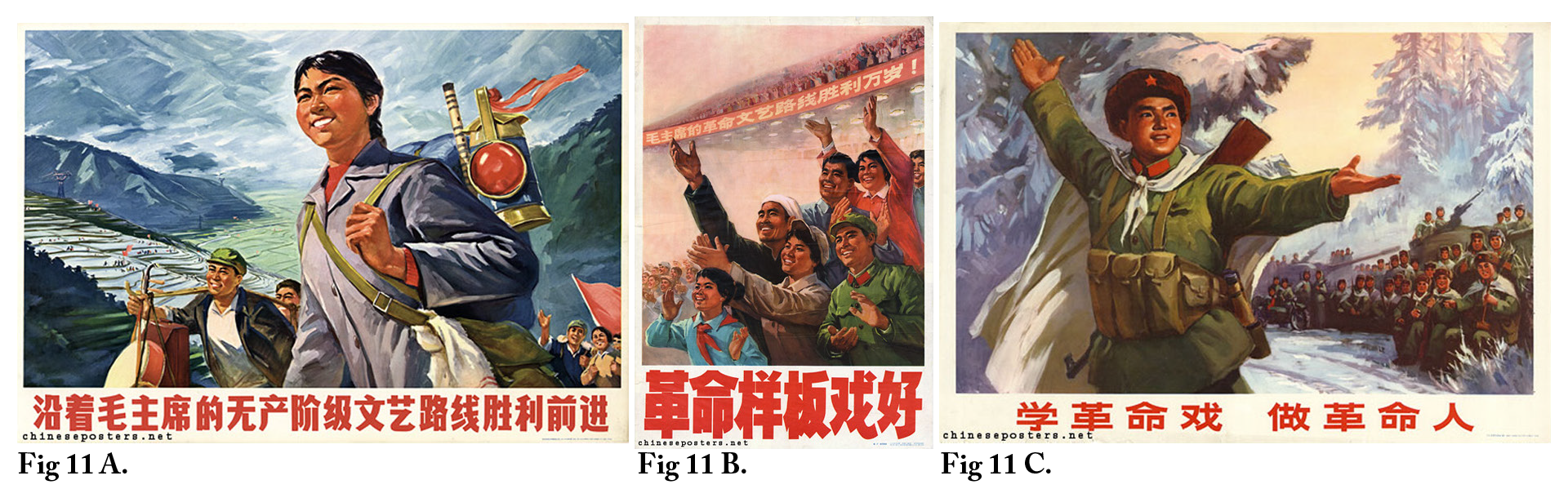
Storytelling in this era also relied heavily on opera and performance, but is now tightly controlled by the state. During the Cultural Revolution (1966–76), Jiang Qing promoted the “model operas” (yangbanxi), eight works that dominated the stage. Traditional tales of emperors, immortals, and filial daughters were swept aside, replaced with revolutionary heroes, soldiers, and workers. Bret Hinsch observes that this was both an iconoclasm and a continuity: the medium of opera, long a vehicle of dynastic cohesion, was appropriated for nationalist-socialist pedagogy. The stories changed, but the structure remained recognisable: epic struggles, moral clarity, collective triumph.
The Communist Party also reinterpreted older heroes through a revolutionary lens. Yue Fei reappeared in propaganda as a figure of resistance not against the Jurchen but against imperialists of the twentieth century. Mulan, once a filial daughter, was recast as a proto-revolutionary, fighting not just for family honour but for the people. Even the Yellow Emperor was invoked occasionally as the ancient ancestor of a people now standing tall under socialism. Neil Munro underlines this continuity: humiliation and glory, inferiority and superiority, were the narrative tensions of Chinese identity. Maoism re-scripted them; China, once humiliated by foreign powers, now stood upright under Communist leadership.
It is important to see how storytelling functioned at every level of society. In villages, travelling troupes staged revolutionary operas. In cities, cinemas screened patriotic films. In schools, children memorised Mao’s sayings and drew cartoons of heroes defeating landlords or American aggressors. Folktales were not eliminated but absorbed: local legends were rewritten to feature class struggle or peasant solidarity. As Chengcheng You shows, the Party was meticulous in ensuring that every cultural form, from picture books to puppet theatre, served the larger narrative of national unity and revolutionary purpose.
The tone of these stories was different from that of the May Fourth era. Where Lu Xun had used satire and despair to jolt readers awake, Maoist storytelling was relentlessly optimistic, filled with shining heroes and inevitable triumph. Critics might call it propagandistic, but for millions, it provided a sense of belonging and direction. A peasant watching The Red Detachment of Women did not merely see entertainment; he or she saw a world where ordinary people like themselves could defeat landlords, foreign armies, and natural disasters. The stories were aspirational scripts for national identity.
By the time Mao died in 1976, storytelling in China had been transformed. Myth, folktale, and opera had been retooled to serve the revolution; new heroes had been minted and old ones repurposed. Nationalism and socialism were entwined, inseparable in the stories people consumed daily. The continuity with earlier periods is clear: just as dynastic tales had provided cohesion, revolutionary stories provided mobilisation. What changed was the scale and the control. For the first time in Chinese history, storytelling was not only widespread but centrally orchestrated, a nationalised medium for shaping both memory and identity.
Reform, Popular Culture, and Nationalism after 1978
When the doors of reform opened in 1978, Chinese storytelling seemed to take a deep breath after decades of constraint. The language of revolution had dominated opera, fiction, and theatre under Mao, but with Deng Xiaoping’s reforms came both an unravelling of control and a search for new anchors. Writers, teachers, and publishers asked a pressing question: how could China tell stories of itself now that the “revolutionary script” was no longer enough?
One of the earliest responses came in the form of scar literature (shanghen wenxue). Short stories like Lu Xinhua’s Scar (1978) or Liu Xinwu’s The Class Monitor gave voice to the traumas of the Cultural Revolution. These tales were not nationalist in the usual sense of glorifying heroes or recalling ancient myths, yet they performed an essential task: they re-centred the ordinary Chinese citizen as the subject of the nation’s story. Bret Hinsch notes that nationalism always requires a “people” who can see themselves as belonging to a shared destiny. Scar literature helped reconstitute people by acknowledging pain and survival as a common inheritance. By the mid-1980s, writers turned toward what came to be known as root-seeking literature (xungen wenxue). Here, myth, folklore, and rural traditions were revalued as sources of authentic identity. Han Shaogong’s Pa Pa Pa (1985), with its surreal rural setting, drew on folk motifs to suggest that national renewal required recovering cultural “roots.”
Similarly, Mo Yan’s Red Sorghum (1986) mixed history, legend, and earthy rural storytelling to portray peasant resistance against Japanese invasion. These works echoed the older mythic tales of Yu the Great or Yue Fei, not by repeating them directly, but by reclaiming the moral and cultural landscape of rural China as the foundation of a resilient national identity.
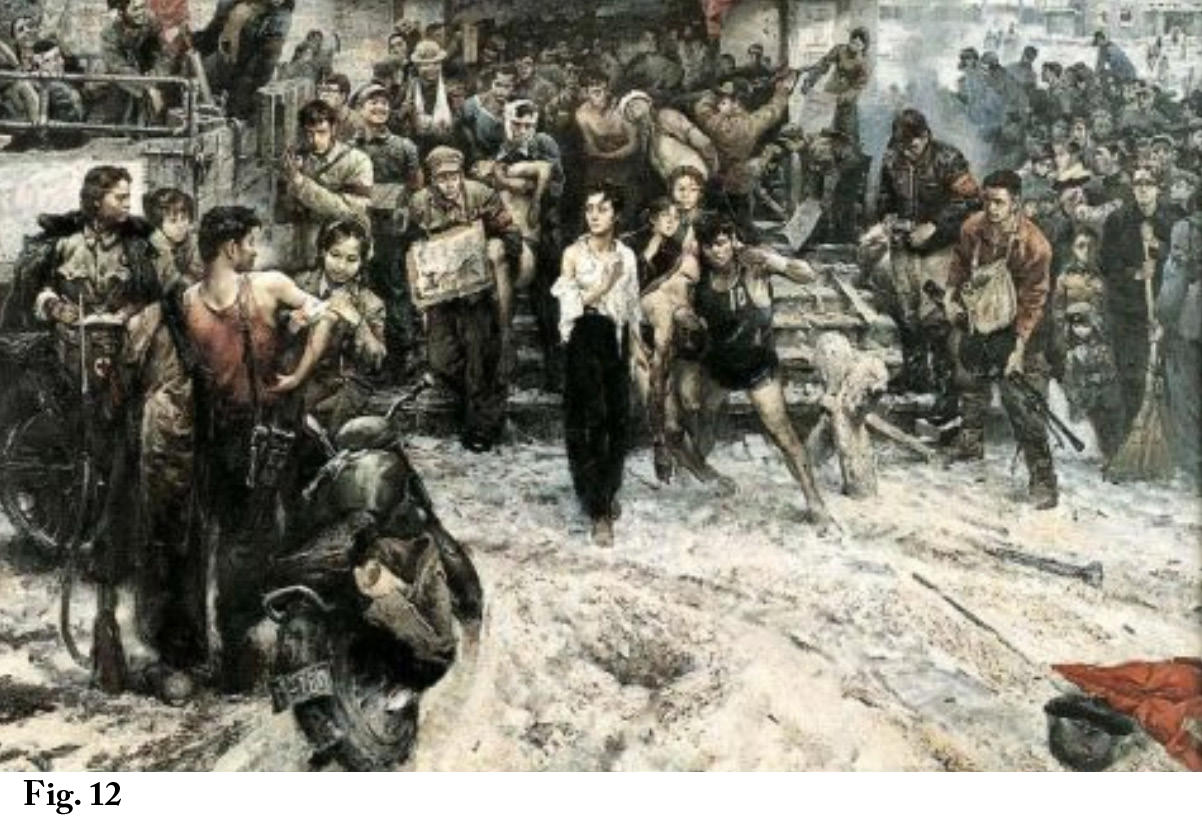

Television also became a powerful medium for reintroducing classical tales to a mass audience. The 1986 adaptation of Journey to the West brought Sun Wukong, the Monkey King, to millions of homes. For audiences who had grown up under the restricted cultural palette of the Cultural Revolution, seeing Monkey King’s mischievous battles against demons was not only entertainment but a reconnection with heritage. Zhang observes that these broadcasts reinforced a sense of cultural continuity: while China was modernising rapidly, its ancient stories were not lost. They lived again, reinterpreted in colour and sound for a new era. Similarly, adaptations of Romance of the Three Kingdoms (1994) placed Guan Yu back at the centre of national imagination, his loyalty and righteousness resonating with older dynastic virtues but now accessible to television audiences across the country.
Alongside these retellings, children’s literature and school curricula played a quiet but influential role. Simplified versions of tales like Yu the Great Controls the Flood, Mulan Joins the Army, and Yue Fei’s Filial Devotion circulated widely in the 1980s and 1990s. These stories were framed less as revolutionary parables and more as moral lessons in perseverance, filiality, and patriotism. Chengcheng You points out that this educational use of folklore was key to bridging past and present: children learned that to be modern Chinese citizens was also to inherit an ancient lineage of heroes.
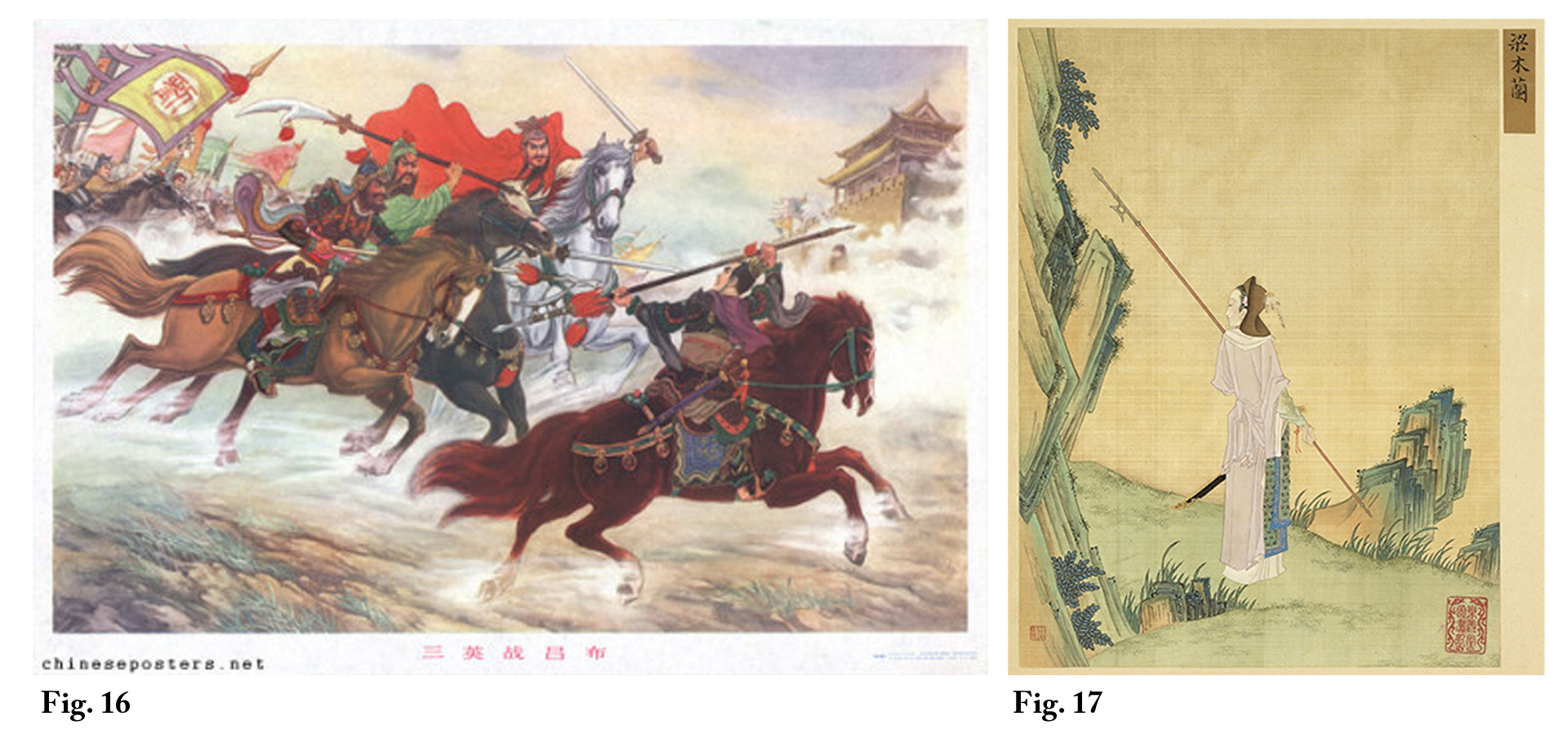
Even in cinema, the most significant works of the reform era often leaned on historical tales rather than pure propaganda. The Opium War (1997), produced to mark Hong Kong’s handover, dramatised nineteenth-century humiliation at foreign hands, reminding audiences of Yue Fei’s timeless injunction to defend the homeland. Zhang Yimou’s Hero went further, retelling the story of Qin Shihuang’s unification. Though controversial, the film reframes Qin’s ruthlessness as a sacrifice for national unity, echoing the old themes of cosmic order and Yu’s taming of floods, now reinterpreted through a cinematic lens. As Neil Munro stresses, the oscillation between humiliation and glory continues to define China’s identity stories.
Another strand of reform-era storytelling emerged in the revival of local folklore. Villages staged their own operas, often reintroducing tales of local deities, ancestral founders, or legendary battles. While not always overtly nationalist, these performances tied local pride to the broader narrative of Chinese cultural survival. Bret Hinsch reminds us that nationalism in China has long relied on layering, myth, local tradition, and state narrative, reinforcing each other. The 1980s and 1990s demonstrated this layering vividly, as village festivals, schoolbooks, and blockbuster films all circulated overlapping stories of who the Chinese were.
What distinguished this period from the Maoist years was plurality. National identity was no longer shaped by a single script of revolutionary heroes. Instead, myths, folktales, historical epics, modern novels, and even imported genres mingled in the same cultural space. A child could read Mulan in a schoolbook, watch Monkey King on television, and later encounter Mo Yan’s novels in high school, all narratives reinforcing, in different registers, that being Chinese meant belonging to a civilisation with deep roots and a resilient spirit.
By the close of the twentieth century, storytelling in China had become a mosaic. Old heroes and tales had returned, not as frozen relics but as living elements of a rapidly changing society. Reform allowed for experimentation, but it also produced a hunger for grounding, and it was in the voices of ancient heroes, folkloric legends, and rural landscapes that many found it. The result was a nationalism less about uniform mobilisation and more about cultural pride, a tapestry of stories that reached from the village stage to the global cinema screen.
Contemporary Nationalism and Global Storytelling (2010s–present)
The pluralism that emerged in the reform era, where a child could meet Mulan in a schoolbook, Monkey King on television, and Mo Yan in a novel, has only multiplied in the decades since. By the 2010s, this web of tales had spilt far beyond print and television into digital platforms, comics, memes, and science fiction. Storytelling in contemporary China is not only about cultural pride; it has become a vital mechanism in the ongoing creation of state identity, shaping how Chinese citizens imagine their nation and how that nation presents itself globally.
The surge of online fiction (wangluo xiaoshuo) demonstrates this vividly. Platforms like Qidian and Jinjiang host serialised works where heroes travel back to the Opium Wars or Japanese invasion, altering outcomes to restore sovereignty. Chengcheng You shows how such narratives rehearse the “century of humiliation” but rewrite it as triumph, offering readers the satisfaction of a strong, unbroken China. These tales reaffirm a shared national consciousness by fusing personal fantasy with collective destiny: to imagine oneself as the agent who saves the nation is to absorb nationalism at an intimate level. In this way, state identity is not only taught from above but lived imaginatively from below.
Chinese crime fiction has emerged in the last decade as a powerful site for negotiating questions of morality and order. Zijin Chen’s novel Bad Kids, 2014, part of his detective trilogy often called the “Cat’s Cradle” or “Hidden Corner”, epitomises this shift. The story begins with three schoolchildren who inadvertently film a murder while exploring the mountains, but what unfolds is less a conventional thriller than a dissection of fractured families, institutional neglect, and the corrosive silence that surrounds wrongdoing. Rather than resolving neatly into a puzzle, the novel lingers on the weight of ethical compromise and the vulnerability of those least able to defend themselves.
Critics noted that while its surface followed global conventions of suspense writing, its underlying force lay in a distinctly Chinese expectation: that stories of crime should also be stories of conscience. In this sense, Zijin Chen’s work continues the moral mission of earlier narrative traditions, where Judge Bao’s incorruptible verdicts or Judge Dee’s intricate investigations served as public lessons in how justice ought to be imagined.
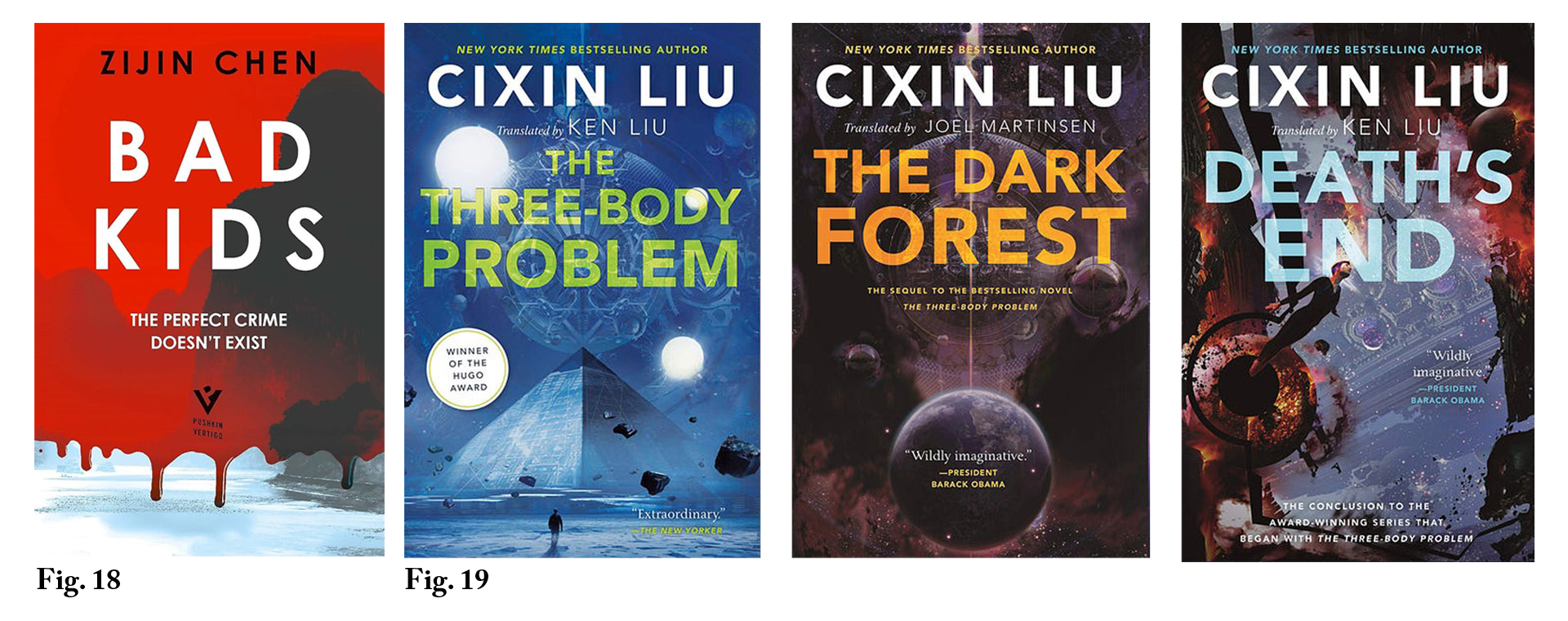
The 2020 television adaptation, The Bad Kids, carried these questions into the national conversation. Broadcast on iQiyi and widely discussed on Chinese social media, the series unsettled audiences with its stark portrayal of childhood entangled in adult corruption. Viewers debated whether the children were innocent victims, unwilling accomplices, or something in between, and whether the adults were trapped by circumstance or by their own moral failings. These debates echoed the participatory engagement of earlier audiences who judged the fairness of magistrates in opera or gong’an tales. What resonated most was not the crime itself but the way the story turned private failings into a mirror of social responsibility. By reframing a detective narrative as an exploration of collective ethics, Bad Kids demonstrates that contemporary Chinese storytelling, even when adopting the idioms of noir and psychological suspense, remains tied to the older conviction that narrative is a civic act—an arena where the community tests its conscience and reaffirms the fragile bonds of trust on which order depends.
Liu Cixin’s Three-Body Problem trilogy carries the impulse of Chinese storytelling onto a cosmic stage. At its heart, the novels frame China as a decisive actor in humanity’s survival, echoing the way older myths cast figures like Yu the Great as cosmic orderers taming floods. In Liu’s hands, that ancient logic is recast for the twenty-first century: China becomes the rational force that holds chaos at bay, securing not just its own destiny but civilisation’s.
Published between 2008 and 2010 under the collective title Remembrance of Earth’s Past, the trilogy begins amid the Cultural Revolution and expands into a meditation on science, politics, and interstellar conflict. Its domestic impact was immense, with critics hailing it as the moment Chinese science fiction came of age and readers embracing its fusion of national history with speculative imagination. The 2014 English translation of the first volume by Ken Liu brought the series to a global audience, earning the Hugo Award in 2015—the first for an Asian author—and sparking debates about how much of China’s political and cultural resonance could be carried across languages. Later adaptations, from the Chinese television version to Netflix’s 2023 series, highlighted further tensions of interpretation: whose vision counts as authentic, and what is lost or reconfigured when a Chinese story is retold abroad? In this sense, The Three-Body Problem not only extend Chinese narrative traditions into the genre of science fiction; it also illustrates how those traditions circulate, transform, and contest meaning on a global scale.
Meanwhile, visual storytelling formats like manhua (comics) and donghua (animation) bring ancient figures into direct dialogue with national identity. Comics during the 2008 Olympics depicted Monkey King battling “foreign demons” to safeguard the torch relay, explicitly fusing myth with sovereignty. Today’s graphic narratives retell Mulan or Guan Yu with modern aesthetics, teaching loyalty, sacrifice, and patriotism in visually engaging ways. Zhang notes that these forms are powerful precisely because they are accessible: young readers internalise national ideals through familiar heroes re-skinned for the present. The result is identity-building by stealth, patriotism carried in panels and animation frames.
Television dramas contribute by dramatising loyalty and betrayal against the backdrop of dynastic China. Nirvana in Fire and The Legend of Miyue may be historical fiction, but they rehearse perennial questions: who is the rightful ruler? What does unity demand? How should subjects serve the state? These series model citizenship by suggesting that the legitimacy of a ruler, ancient or modern, lies in their ability to protect the people and maintain order. This links directly to what Neil Munro calls the dialectic of humiliation and glory: betrayals and defeats dramatise humiliation, but loyal protagonists reassert the glory of an enduring state.
The digital sphere adds another crucial layer. Memes and short videos on platforms like Weibo and Douyin repurpose figures like Guan Yu or Mulan to comment on foreign companies, territorial disputes, or global politics. A viral sticker of Guan Yu glaring at a map of Taiwan is not just a joke; it is a miniaturised performance of state identity. Neil Munro underlines how pride and grievance animate contemporary nationalism; memes make those affective poles portable, shareable, and repeatable. Through humour, anger, and creativity, citizens become co-authors of the nation’s story.
The state itself amplifies these processes. The Belt and Road Initiative (BRI) is narrated not merely as an economic policy but as a civilisational mission, using animations and documentaries that link it to the Silk Road, Zhang Qian, and Zheng He. This is storytelling as statecraft: framing modern geopolitics as the fulfilment of an ancient destiny. Bret Hinsch’s argument that myths confer legitimacy applies seamlessly here. By projecting the BRI as continuity with millennia of outreach and leadership, China reaffirms itself as a historical state with a rightful global role.
Even interactive formats like video games contribute to this identity project. In Glorious Mission, developed with PLA backing, players take the role of Chinese soldiers defending sovereignty. Here, identity is not read but enacted. Players embody the nationalist ideal of sacrifice and defence, experiencing themselves as part of the state. This is perhaps the most direct form of what Benedict Anderson once called “imagined communities”: the nation not just imagined in print but inhabited through play.
Taken together, these diverse forms reveal a striking continuity: myths of Pangu, Yu the Great, Mulan, Guan Yu, and Yue Fei still circulate, but now refracted through comics, memes, novels, and games. The medium has changed; the function endures. Nationalist storytelling remains the linchpin of identity-making, ensuring that the state is not an abstraction but a living story, repeated daily in classrooms, on screens, and across digital platforms. In this sense, contemporary storytelling is less about inventing new myths than about equipping old ones to carry the weight of twenty-first-century statehood.
Conclusion: Storytelling and the Making of Chinese Identity
Looking back across two millennia of Chinese storytelling, what stands out is less the invention of wholly new tales than the extraordinary capacity of old ones to endure, adapt, and serve new purposes. Myths of Pangu splitting heaven from earth or Yu taming the floods, first told to legitimise dynasties, did not vanish with the fall of those dynasties. Instead, they resurfaced in later centuries, recast through Confucian morality, patriotic poems, revolutionary dramas, school textbooks, online novels, and digital memes. At each stage, the stories carried with them a way of imagining what it meant to belong to China, what the state was for, and how its people should act.
This endurance was not limited to myths of cosmic creation or dynastic heroes. Figures such as Bao Zheng, the incorruptible Song magistrate, and Di Renjie, the Tang detective-magistrate immortalised in gong’an case collections, show how legal storytelling also became part of the national repertoire. Their popularity in opera, fiction, and later global translations demonstrates that Chinese identity has long been imagined not only through ancestry and sacrifice but also through justice and moral order.
National identity in China has thus been profoundly narrative in character. Yue Fei’s loyalty, Mulan’s filial courage, Monkey King’s irrepressible spirit, and Guan Yu’s righteousness became moral exemplars not only for individuals but also for the community as a whole. They embodied values that linked family duty to national service, or cosmic order to political unity. As Bret Hinsch reminds us, Chinese nationalism did not begin in the nineteenth century; it had been centuries in the making through precisely these narrative traditions.
With the crises of the late Qing and Republican eras, the same figures gained a sharper political edge. Lu Xun’s Ah Q mocked complacency; Lei Feng’s diary became a socialist parable; Mao-era operas turned folk heroes into revolutionary models. After 1978, pluralism returned: novels and television dramas allowed ancient epics and rural folklore to flourish again, while contemporary media, from Liu Cixin’s science fiction to patriotic memes on Weibo, continue to carry the story forward. Liu Cixin’s Three-Body Problem trilogy (2008–2010) pushes these traditions outward onto a cosmic stage. Beginning in the Cultural Revolution and unfolding into interstellar conflict, it positions China as a decisive actor in humanity’s survival. The 2014 English translation by Ken Liu, which won the Hugo Award in 2015, brought the trilogy to global attention and sparked debates about how Chinese narratives are transmitted across languages and media. Later screen adaptations, including Netflix’s 2023 version, highlighted tensions of representation and authenticity, reminding readers that stories not only travel but are reshaped by the contexts in which they appear. At home, the trilogy has been read as proof of China’s imaginative strength; abroad, it has become a landmark of world science fiction. What changes is the medium and the emphasis, not the function: stories make the nation legible to itself.
Equally important, these stories have helped construct state identity. The Yellow Emperor is not just an ancestor but a symbol of political unity; Yu the Great’s flood control stands as a template for order imposed by legitimate rule; modern adaptations of Mulan or Guan Yu teach not simply virtue but loyalty to the state as protector of the people. In the twenty-first century, projects like the Belt and Road Initiative are wrapped in narratives of Zhang Qian and Zheng He, explicitly tying statecraft to mythic destiny. Here, storytelling operates as soft power at home and abroad, presenting China as both an ancient civilisation and a modern state.
The cumulative effect is powerful. For citizens, these narratives provide continuity across ruptures, a sense that China has always been, and will always be, a coherent entity with a shared destiny. For observers outside China, the same stories shape perceptions: China is seen variously as a civilisation steeped in loyalty and order, as a victim of historical humiliation, or as a resurgent power reclaiming its rightful place.
There is no single “reading” of these stories. For some, they affirm state legitimacy; for others, they inspire cultural pride or moral reflection. They can be instruments of mobilisation, but also of humour, satire, and local identity. Precisely because they are layered, flexible, and resonant, they have survived dynasties, revolutions, reforms, and the digital age.
In the end, what the evolution of Chinese storytelling demonstrates is that the nation is not only a political structure or an economic force. It is also, and perhaps above all, a narrative community, one that has been told into being over centuries. To study the myths, folktales, novels, dramas, comics, and films is to see how China has repeatedly crafted and recrafted both its national soul and its state form. The stories endure because they are more than entertainment; they are the very language through which China understands itself and shows itself to the world.