

- Español
- Hindi
- Marathi
- Kannada
- 中文 (简体)
- Français
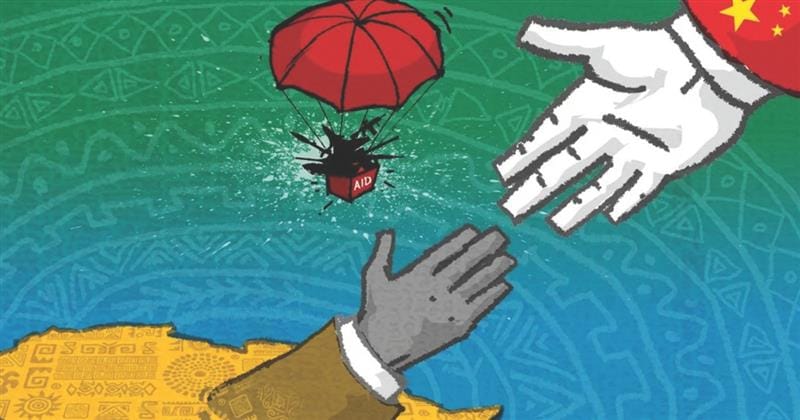
Peace has long been a contested concept in global politics. For the West, particularly after the Cold War, it meant elections, constitutions, civil society, and human rights. For China, peace is something else entirely. Beijing prefers the language of “stability” and “development.” Its leaders describe their approach as “developmental peace,” a model rooted in China’s own history of lifting hundreds of millions out of poverty without liberalisation. The difference matters. In fragile states such as Sudan, Myanmar, Pakistan, and Afghanistan, Chinese engagement has become visible, even decisive. Roads, pipelines, hydropower dams, and mining concessions now dot regions once left to Western aid agencies and UN missions. But the outcomes differ from what Washington or Brussels expect. Beijing seeks order, not liberal transformation. It delivers infrastructure, loans, and diplomatic cover, but rarely conditions these on political reform. The result is often what might be called stability without liberal peace: temporary calm, sometimes in narrow corridors around Chinese projects, but little change in governance, accountability, or inclusivity in these regimes.
China’s Idea of Developmental Peace
The term “developmental peace” emerged in Chinese academic and policy circles in the mid-2000s and has since been used by scholars such as He Yin and Wang Xuejun. It is based on three assumptions. First, economic development is the foundation of security. Second, peace requires a strong state that protects sovereignty and keeps the regime in control. And third, external actors should respect local conditions and avoid imposing political systems.
This is China’s self-image. Officials claim that, unlike the West, China promotes peace without strings. Xi Jinping calls the Belt and Road Initiative (BRI) a “road for peace.” A 2023 government white paper went further, branding BRI a “path to peace,” injecting “positive energy” into world development. By 2024, more than 140 countries had signed BRI memoranda, with over $1 trillion in pledged investments.
Yet the practice is more complex. Recent research by Pascal Abb shows that BRI investments in conflict-affected states often have dual effects. On the one hand, they provide financing where no one else will. On the other hand, they risk stoking grievances over land grabs, elite capture, and uneven distribution of benefits. Yeonju Jung and Karina Shyrokykh, analysing 18 years of data, find that China’s peace engagement correlates strongly with the economic needs of recipient states but less so with China’s own resource interests. Security and diplomatic stakes do play a role, particularly near China’s borders, but the overall picture is not just mercantile opportunism.
From another angle, Jung critiques developmental peace through feminist IR. She argues that China’s model, much like liberal peace, remains state-centric and top-down, marginalising women, minorities, and local communities. What appears as an alternative is, in her words, “not substantively different.” Developmental peace may diversify the field nominally, but it does not resolve the inequities baked into both liberal and authoritarian models.
Sudan and South Sudan: Oil and Order
Sudan was China’s first large-scale experiment with conflict engagement. By the early 2000s, the China National Petroleum Corporation (CNPC) had invested billions in Sudanese oil. At its peak, 60 percent of Sudan’s oil output went to China. Darfur’s civil war and later South Sudan’s independence threatened those assets and exposed Beijing to global criticism. Western activists even branded the 2008 Olympics the “Genocide Games” because of China’s ties to Khartoum.
China responded pragmatically. It pressed Khartoum to accept a joint UN–African Union peacekeeping mission. It deployed special envoys and quietly lobbied rebel leaders. After South Sudan’s independence, Beijing mediated oil transit disputes between Juba and Khartoum. When civil war erupted again in 2013, China contributed combat troops to the UN Mission in South Sudan (UNMISS), its first such deployment, specifically mandated to protect oil installations.
The results were mixed. Oil exports resumed, Chinese staff were protected, and host governments gained breathing space. But neither Darfur nor South Sudan’s civil war ended. Regimes stayed authoritarian, and civilians continued to suffer. The outcome was selective stability: peace around oil fields and pipelines, not across the country.
Abb’s research notes that local actors saw this clearly. Khartoum and Juba both used Chinese mediation and investment to reinforce their own authority. Rebels accused China of shielding incumbents. China had become a conflict manager, but one whose priority was safeguarding its assets rather than brokering a political settlement.
Myanmar: Borders and Pipelines
Myanmar has long been one of China’s most sensitive neighbours. The two countries share a 2,100-kilometre border. For Beijing, Myanmar is both a gateway to the Indian Ocean and a potential source of instability spilling into Yunnan. The China–Myanmar Economic Corridor (CMEC), part of BRI, includes oil and gas pipelines, transport routes, and the Kyaukphyu deep-sea port. Many of these projects run through conflict-prone ethnic minority states.
China’s involvement began with mediation. Beijing hosted ceasefire talks with groups such as the Kachin Independence Army and nudged the government toward truces that would keep pipelines safe. For years, Chinese diplomats framed development as the path to reconciliation.
But when the Tatmadaw seized power in February 2021, Beijing recalibrated. It avoided criticising the coup, continued backing infrastructure deals, and coordinated closely with the junta to secure projects. Local militias and even some ethnic armed organisations pledged to protect Chinese investments.
The pipelines and ports survived. Yet Myanmar itself collapsed further into violence, repression, and economic ruin. Anti-junta resistance grew more intense. Protests against Chinese projects, from the Myitsone dam to copper mines, multiplied. Far from unifying, BRI often exacerbated divides by empowering the central military while alienating ethnic minorities.
The result is another example of selective stability. Corridors of calm exist around Chinese projects, secured by both the Tatmadaw and local armed groups. But the broader polity is less stable, more repressive, and more divided. China preserved order for itself but not peace for Myanmar.
Pakistan: CPEC and the Military
If Myanmar is close, Pakistan is indispensable. The China–Pakistan Economic Corridor (CPEC) is the flagship of BRI. Worth more than $60 billion, it links Xinjiang to Gwadar on the Arabian Sea. Two-thirds of CPEC projects run through volatile regions such as Balochistan and Khyber Pakhtunkhwa. The stakes are high. CPEC includes highways, railways, power plants, and ports. Between 2014 and 2022, separatists carried out more than 30 attacks on CPEC sites. In 2021, a suicide bombing killed nine Chinese engineers in northern Pakistan.
China’s answer was to embrace Pakistan’s military. Special security divisions with 15,000 troops were created to guard Chinese projects. The military became CPEC’s main manager, sidelining civilian authorities and provincial governments.
CPEC has delivered results. Energy shortages have eased, highways have been built, and Gwadar port is operational. But the politics are fraught. Local communities, especially in Balochistan, feel excluded. Protests highlight land seizures, lack of jobs, and environmental damage. Surveys suggest that nearly half of respondents in Balochistan believe CPEC benefits outsiders more than locals. Militancy has not vanished; it has shifted tactics.
Here, the pattern is again visible. Development projects stabilise key infrastructure and bolster the military regime, but they do not resolve underlying grievances. CPEC is a “fusion of Chinese developmental and Pakistani security-state objectives.” The corridor functions, but democracy is weaker, and local resistance continues.
Afghanistan: Engaging the Taliban
Afghanistan has always been on Beijing’s radar. The narrow Wakhan Corridor links it to Xinjiang, and Chinese officials worry about extremist groups using Afghan soil to target China. Until recently, Chinese investments were limited. But Afghanistan’s mineral deposits, especially copper at Mes Aynak, have long attracted Chinese interest.
Even before the U.S. withdrawal, Beijing cultivated contacts with the Taliban. In July 2021, Foreign Minister Wang Yi hosted a Taliban delegation in Tianjin, calling them an “important force.” When Kabul fell weeks later, China refrained from formal recognition but quickly sent humanitarian aid and vaccines.
The deal was straightforward: the Taliban promised not to support Uyghur militants, and China offered economic engagement. In 2023, a Chinese firm signed a $540 million oil extraction contract in northern Afghanistan, marking one of the first major foreign deals under the Taliban’s rule.
This is developmental peace stripped to its essence. China did not press for women’s rights, democracy, or inclusive governance. Its concerns were security and investment. Afghanistan gained short-term stability for its regime, not for its society.
The Data and the Drivers
The case studies point to a pattern: China intervenes when it has something to lose. Exposure and proximity are strong predictors. When pipelines, ports, or nationals are at risk, especially in China’s neighbourhood, Beijing abandons its passive script and steps in.
Recent data adds nuance. A large-N study by Jung and Shyrokykh finds that recipients’ needs also matter. Countries with dire economic conditions attract more Chinese engagement, even if they lack resources that Beijing covets. That suggests China seeks not just profit but also the image of a “responsible great power.”
Security and diplomacy remain central. Conflicts near China’s borders, like in Myanmar and Afghanistan, elicit more activism. So do cases where reputational costs are high, as in Sudan during the Darfur crisis. But across cases, one thing is missing: liberal outcomes. Using governance datasets like V-Dem, scholars find no consistent improvement in civil liberties or political participation where China is heavily engaged. Violence may decline around Chinese projects, but rights do not expand.
The numbers sharpen the point. Beijing now pays 15.2% of the UN’s peacekeeping budget, second only to Washington. More than 2,500 Chinese troops serve in Africa, from South Sudan to Mali, the largest contribution of any UN Security Council member. These are not expeditionary combat units. They are protective deployments, often posted near oil facilities, bases, or key trade corridors. Still, for a country that once swore never to deploy troops abroad, the symbolism is striking.
The financial footprint is even bigger. By 2022, China had pledged $838 billion in BRI loans and grants, according to AidData. More than $100 billion went to fragile or conflict-affected states such as Pakistan, Myanmar, Sudan, and Ethiopia. Roughly 40% of BRI projects overall have landed in authoritarian or unstable countries, based on World Bank governance scores. This is not a coincidence. Beijing is moving where others will not.
Conflict data captures the mixed results. In South Sudan, deaths peaked at 50,000 in 2014. By 2017, after Chinese peacekeepers arrived, fatalities dropped below 15,000. That is real evidence of “negative peace” — less killing, but no political settlement. Governance scores tell the other half of the story: civil liberties did not improve. Stability rose. Freedom did not.
Pakistan’s experience cuts the other way. CPEC, valued at over $60 billion, promised energy and growth. Yet ACLED reports an 80% rise in attacks on infrastructure in Balochistan between 2015 and 2021 compared with the years before CPEC. The corridor runs, but under siege. Public opinion mirrors the divide. Nationally, Pew found 46% of Pakistanis view China favourably, but provincial polls show 67% of Baloch respondents oppose CPEC. Roads were built, but resentment deepened.
The evidence is somewhat clear. China can reduce risks around its assets. It buys order in specific places. But the order it builds is brittle and uneven, delivering stability for investments, not necessarily for societies.
Domestic Drivers: Why Beijing Cares
It is tempting to see all this as foreign policy. In reality, it is also domestic.
Xinjiang looms largest. For Beijing, instability in Afghanistan, Pakistan, or Myanmar is never just “out there.” It is next door to Xinjiang, home to 12 million Uyghurs. The fear is simple: unrest abroad could bleed across borders, offering sanctuary to militants. Stabilising these neighbours is as much about domestic security as international order.
Then there are the state-owned enterprises. CNPC in Sudan, Sinohydro in Myanmar, PowerChina in Pakistan; these firms lobby for projects, win contracts, and pour in workers. Once exposed, they become pressure points. When projects come under attack, SOEs lean on Beijing to step in. What begins as commerce becomes geopolitics.
The Communist Party also has a propaganda stake. At home, “non-interference” is trumpeted as proof that China does not blunder like the West. Yet the same state media proudly highlights peacekeepers in Africa or envoys in Myanmar as evidence of China acting like a “responsible great power.” Developmental peace is framed as both moral and practical; as a narrative that bolsters legitimacy at home while defending China’s interests abroad.
And all of this is folded into Xi Jinping’s ideological project, the “community of shared future for mankind.” Stability abroad validates the Party’s claim that its model of order first, development second, politics later is not just Chinese, but universal.
Rhetoric and Branding
Equally important is how China describes its actions. Beijing avoids terms like “peacebuilding” or “conflict resolution.” It speaks instead of “stability” and “development.” This rhetorical strategy allows China to maintain the fiction of non-interference, even when it mediates talks or deploys peacekeepers.
South–South cooperation is another trope. By branding its engagement as solidarity with the Global South, China presents itself as an alternative to Western paternalism. In multipolar forums, Beijing positions developmental peace as a corrective to liberal peace’s failures.
Yet the local experience is mixed. Infrastructure can empower central elites while excluding communities. Feminist critiques highlight the marginalisation of women and minorities. Stability is achieved, but grievances fester.
Feminist and Post-Colonial Critiques
Scratch beneath the surface, and the model looks less benign.
In South Sudan, Chinese peacekeepers guarded oil sites. Women, meanwhile, made up less than 5% of peace negotiators. The benefits of stability flowed to companies and governments, not communities or families. The pattern repeated elsewhere.
In Pakistan, CPEC created thousands of jobs, but overwhelmingly for men. Women remained in informal or low-wage sectors. Developmental peace, like liberal peace before it, has been blind to gender. It stabilises states, not societies.
Post-colonial scholars see echoes of an older story. The British built railways in India to move goods to ports. The French built roads in Africa to extract resources. China’s BRI looks different in branding but familiar in function. Dams, pipelines, and ports often bypass local needs to serve global markets. Local agency lies mainly with elites who broker deals with Beijing. Communities on the ground are spectators, not shapers.
The critique cuts deep: developmental peace is not an alternative to liberal peace. It is a cousin. Both sideline the marginalised. Both privilege elites. And both risk hardening the structures that fuel conflict in the first place.
Conclusion: Stability Without Transformation
China has crafted a distinctive model of conflict engagement. It is pragmatic, interest-driven, and development-led. It provides infrastructure, loans, and diplomatic support. It uses persuasion and incentives rather than sanctions or conditionalities. And it consistently aligns with incumbents who can guarantee order.
The outcomes are visible. Violence around Chinese projects often declines. Regimes gain breathing space. Economies receive injections of infrastructure and aid. But deeper conflicts remain unresolved. Sudan stayed authoritarian until its own people toppled the regime. Myanmar’s junta endures. Pakistan’s military has grown stronger. Afghanistan’s Taliban have been legitimised.
This is stability without liberal peace. It is peace for pipelines, not for people. It suits Beijing’s interests and offers governments in crisis an appealing alternative to Western pressure. But it leaves untouched the grievances that drive conflict. And sometimes, by reinforcing elites and militaries, it deepens them.
Whether developmental peace can deliver lasting stability remains uncertain. For now, it delivers a narrow peace: corridors of calm, projects completed, regimes protected. For the millions living in conflict zones, that is hardly enough.
The harder question is whether this model lasts.
Short term, it works. Oil flows in Sudan. Pipelines run in Myanmar. Corridors open in Pakistan. But the long-term record is shakier. Sudan’s regime collapsed in 2019 despite years of Chinese support. Myanmar’s junta faces armed resistance even as it secures Chinese projects. Afghanistan’s Taliban rule is brittle, propped up by aid and fear, not legitimacy.
The risk is clear. Developmental peace creates brittle stabilisations: regimes that look secure until they suddenly are not. They buy time but not trust. They deliver order for investors but not justice for citizens. And when they fall, they fall hard, dragging China’s interests with them.
Beijing may find itself in the same trap as the West. Billions sunk into fragile states. Projects abandoned or bombed. Local resentment turning into anti-China politics. For now, China is still testing the limits. The question is whether developmental peace is a stopgap or a sustainable alternative. The jury is out.