

- Español
- Hindi
- Marathi
- Kannada
- 中文 (简体)
- Français
Introduction
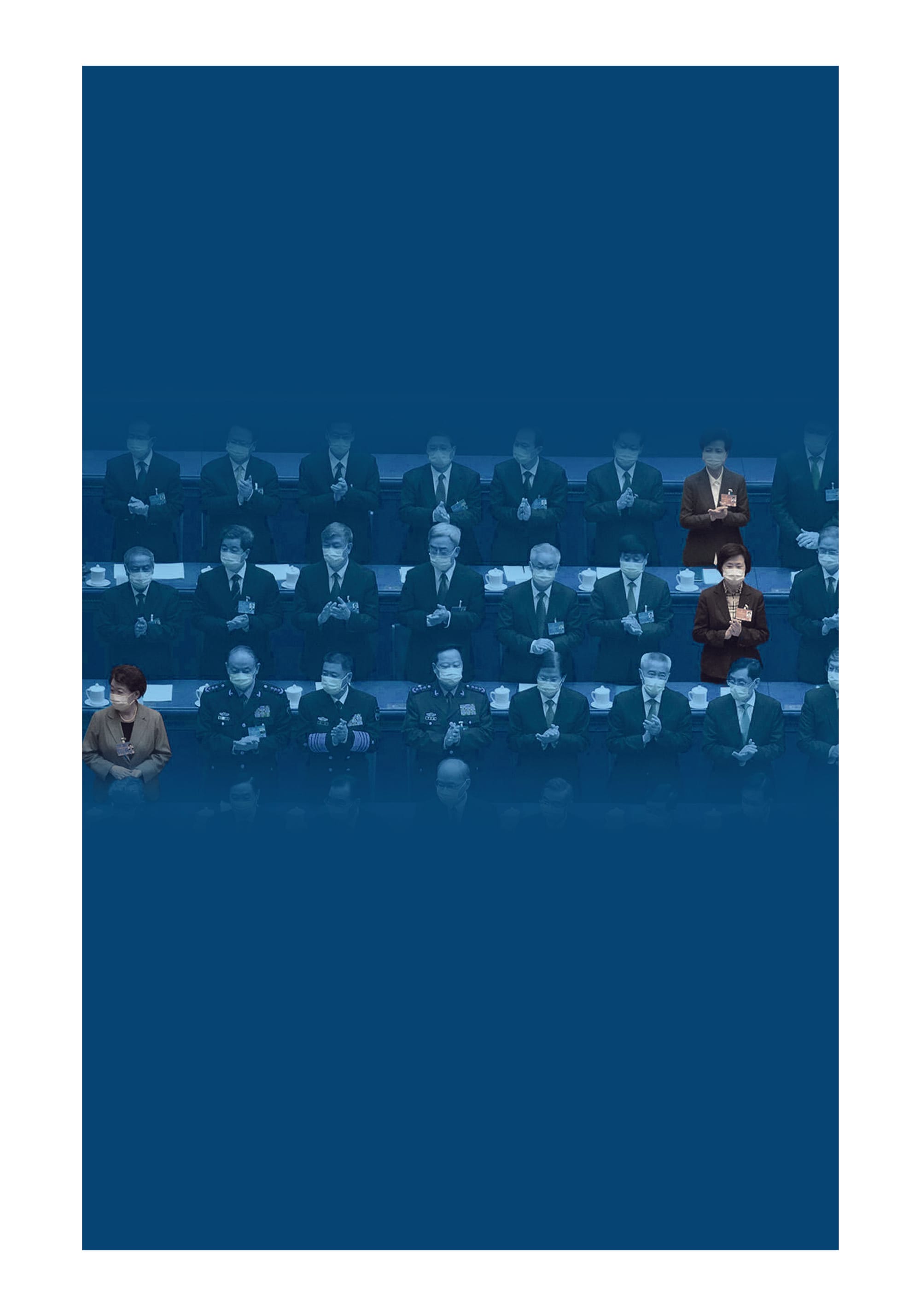
China poses a striking paradox when it comes to gender politics. While women make up 48–49% of the population, their presence in political leadership remains relatively low in comparison. Despite touting lines of promoting gender equality, having mandated quotas, and rising education levels among women, political representation of Chinese women is remarkably low and often symbolic.
This discrepancy highlights an important question to explore:
Why have women eluded political representation despite the structural and social progress made by China that in any situation would support parity?
Rather than being a linear march through history, the narrative of women in Chinese politics is one of selective instrumentalisation and institutional exclusion, which has brought to light the internal contradictions of China.
The essay is a reflection on the persistent under-representation of women in Chinese politics and is based on the combined effects of state feminism and institutional exclusion. The logic of state feminism encodes the instrumentalisation of women to meet developmental and strategic goals rather than actual political participation. Institutionally, women have been excluded from career pathways, quota limitations, and company norms that reinforce a glass ceiling. These male-dominated pathways, coupled with the logic of the state, are why, despite formal inclusion, women have remained marginal in politics.
Women’s Representation Through Numbers
If we were to glance at the quantitative evidence of women’s inclusion in Chinese politics, it paints an abysmal picture. At the legislative level, women occupy around 26–27% of seats in the National People’s Congress (NPC) and 22% in the Chinese People’s Political Consultative Conference (CPPCC).
In 2022, in the Central Committee of the Chinese Communist Party (CCP), only 11 of the 205 members were women. That is merely 5.4% representation. Adding to this is the fact that the Politburo and Standing Committee currently do not have any female members. Historically speaking, the Politburo has included women, but the same cannot be said for the Standing Committee.
At the provincial level, matters remain the same – party secretaries and governors are overwhelmingly male, with a few token representations of women. Despite having a long history of gender quotas from as early as the 1930s to Maoist reforms and the Cultural Revolution, quotas have been used simply as a tool of political mobilisation and not genuine empowerment. Informal norms and party priorities have constantly undermined the inclusion of women in any meaningful manner in the political process. This proves that the entire “add-gender-and-stir” method rarely creates substantive changes for gender equality.
Thus, despite making up half the population of the country, women are consistently under-represented at decision-making levels, especially at the apex of power.
State Feminism and Women as a Political Tool
There can be no denying that Chinese politics reflects the deliberate efforts of the state to instrumentalise women’s political participation rather than promote genuine empowerment. Women’s status during the Mao era was defined by the term “Iron Women.” They were called to mobilise as workers, soldiers, and revolutionaries. While the framing of women’s contributions, predominantly coined in the idiom of gender equality and sexual liberation, often created an additional layer of oppression – a “double burden.” Women were expected to participate in paid work while continuing to perform unpaid domestic labour as wives and mothers, which merged their newer responsibilities with traditional gendered expectations. Equality here was constructed as functional and collective, serving the state’s ideological and productive ends rather than women’s individual and autonomous social position.
In the post-Mao era, particularly with the rise of Deng Xiaoping, there was a discursive shift towards an essentialist understanding of gender roles for women. They were not just called to represent women in terms of motherhood, family, and moral virtue, but were encouraged to enact Confucian ideals of yin–yang harmony. State-sponsored economic modernisation was compatible with these traditional ideas of femininity. The narratives held strong for both men and women.
With Xi Jinping, traditional womanhood has been revived, all in the name of being both pro-natalist and nationalist. Birth policies that encourage women to give birth, maintain family structure and values, and embody moral virtue are tied to state narratives of women as custodians of social and cultural maintenance. In this trajectory of social development, the very notion of woman is instrumentalised for the ends of the state rather than as an autonomous political subject worthy of decision-making.
Women’s visibility is symbolic and conditional at best, dependent on acting in national collective ways that do not redirect substantive political power away from the status quo.
Institutional Exclusion and the Glass Ceiling
Colluding with this logic of the state is the role that institutions play in keeping women from political power. The CCP’s system of promotions favours male-dominated networks and career paths. Guanxi networks and early entry into the party system remain elusive to women. Even the norms of retirement – where women retire earlier than men – circumvent their ability to hold top-tier positions in the party. This ultimately curtails long-term career trajectories.
As mentioned earlier, the quota system is highly tokenistic and applied weakly. While there is guaranteed numerical representation at the lower levels, no substantive authority or influence is wielded by these women. Even the portfolios of policymaking inhabit a gendered logic – “soft” portfolios are given to women, including profiles like education, health, or social welfare, whereas men remain in control of “hard” portfolios like national security, finance, or foreign policy. Informal networks, mentorship, and senior-level guanxi reinforce male solidarity, establishing a self-reproducing hierarchy of leadership. Women encounter structural barriers not merely in being promoted but in achieving legitimacy within these elite networks.
The combined impact of these formal and informal barriers creates a glass ceiling that women constantly run into. Women are seen in lower ranks and lesser portfolios but do not frame policies or set national agendas.
Why Does This Matter?
With its projection of itself as a modern, progressive global actor, China’s all-male leadership undermines its soft power projections globally. Gendered imbalances in politics often create a symbolic perception of power rather than a substantive and inclusive reality. This weakens international credibility, leading to poor perception.
Domestically, the exclusion of women diminishes the diversity of ideas in policymaking, especially in demographic, health, and social policy areas. Women’s under-representation in leadership positions compromises the ability to effectively address issues like ageing populations, reproductive health, and social welfare, because these issues are treated as secondary within masculine leadership circles.
China illustrates a style of symbolic inclusion characteristic of authoritarian regimes – women are seen in rhetoric and quotas but not substantive power. This institutional exclusion supports structural areas of blindness in governance and policy construction, which over time can weaken long-term institutional effectiveness. This is reflective of a male-dominated culture that often views women as instrumental rather than autonomous.
Conclusion
The paradox of Chinese women’s political representation remains evident: on the one hand, they are hyper-visible in official discourse and state rhetoric, but remain unseen in positions of authority. While this essay provides a cursory understanding of this situation, further research is required to better understand how the Chinese quota system works and the gendered nature of how power is conceived in society.
The two mechanisms addressed here – state feminism that instrumentalises women and enforced exclusion through institutional channels, networks of guanxi connections, and tokenistic quotas – work in tandem to reproduce male-dominated leadership and maintain hierarchical power structures, granting women visibility but little actual influence.
The question persists whether women will be able to achieve genuine political power without radical structural or cultural changes.
If the past is any indication, unless substantive changes are made in quota implementation, portfolio allocation, and the way networking works in the CCP, women will remain symbolic in China.