- Español
- Hindi
- Marathi
- Kannada
- 中文 (简体)
- Français
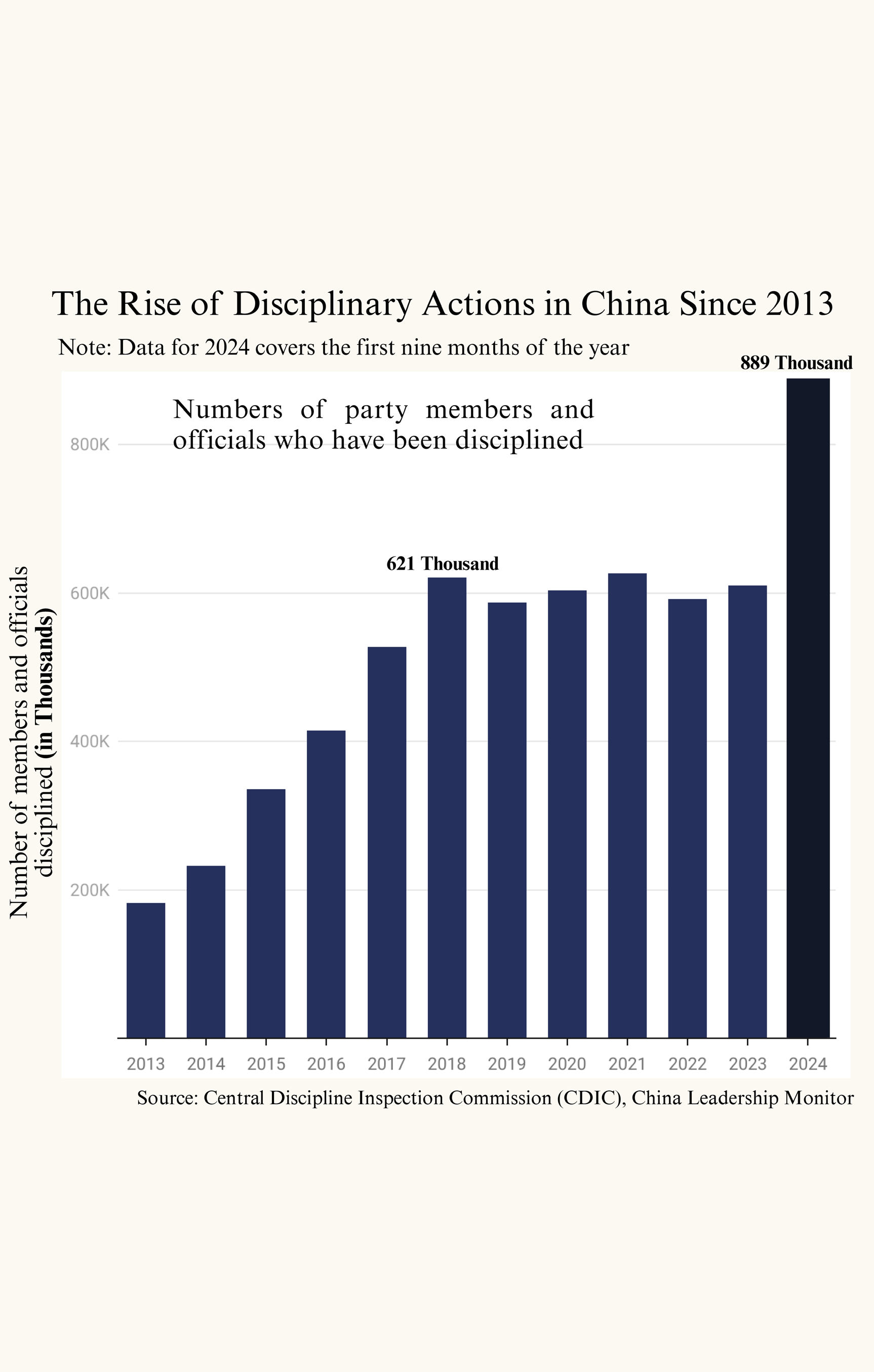
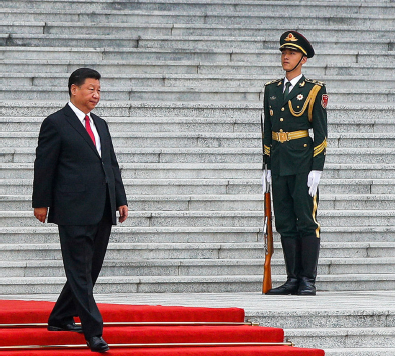
Xi Jinping, 71, has established himself as the most authoritative leader of China since Mao Zedong, and holds unquestionable power over the second largest economy in the world and 1.4 billion citizens. Since taking office in 2012, Xi has transformed the domestic governance and foreign relations of China, completely centralizing power and implementing an increasingly aggressive foreign policy that has altered the course of global geopolitics.
China, under Xi’s rule, is now a strategic competitor to U.S. dominance, and undermines the Western-led order in the world, including through shuttering innovations like the Belt and Road Infrastructure program, and bolstering its military in the South China Sea. Xi abolished presidential term limits in 2018, revealing his plan for unlimited rule, making him potentially the most powerful actor in the world in advance of global markets and security.
Career Summary
Earlier Career (1979-2007)
Xi’s advancement in the ranks of China’s political establishment took almost thirty years across several provinces. Having worked as personal secretary to Defense Minister Geng Biao, he built experience as one of the top provincial level officials in Hebei, Fujian, and Zhejiang provinces, and then served the short and sweet title Party Secretary of Shanghai in 2007.
Ascension to Power (2007 - 2012)
In 2007, Xi was selected to the Party Politburo Standing Committee, and over time, became Hu Jintao’s heir while Vice President and oversaw preparation for Beijing 2008 Olympics, a watershed moment in international relations and China moving toward the global spotlight.
Rising to Power (2012 - Present)
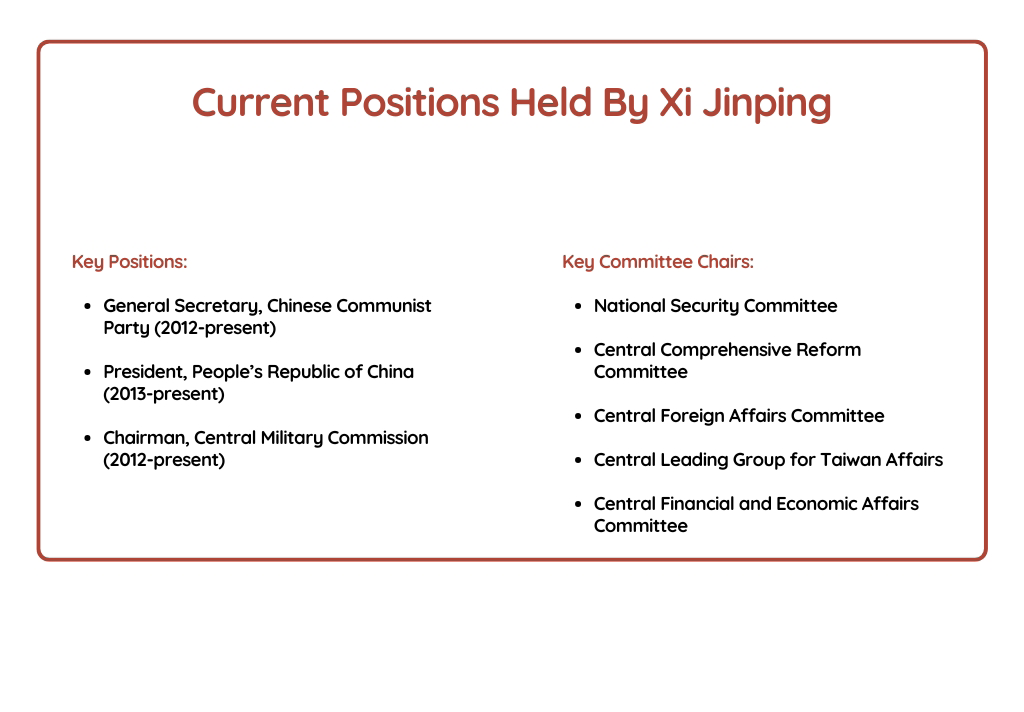
Xi took Hu Jintao’s baton as General Secretary of the Party in November 2012 and the President of the People’s Republic in March 2013, signalling him to undertake a widespread and massive consolidation of power and reorganization of the governance architecture in China.
Background - Xi
Family background
Xi was born on June 15, 1953, to Xi Zhongxun (a revolutionary war hero and Vice-Premier); Xi has a princely status and authority, Xi’s family subjected to all suppression during the cultural revolution are outsized grasp of generational trauma; still has a hold in it. So, while the solidarity and trauma would have minimally passed through Xi’s immediate experience contributes to thoughts and policy genesis
Xi had to take a break from his education at 15 in Shaanxi province, and spent 7 years of physical labor because of the cultural revolution; Xi points out there would be challenges and insights from definitions of common person and what the challenges and daily experiences were for rural poor people of China.
Education: Chemical Engineering, Tsinghua University, (1975-79); Doctorate in Law (Marxism) Tsinghua University (1998-2002, part time).
Personal Life: Married to Peng Liyuan, famous traditional folk singer, past major-general in the PLA, WHO goodwill ambassador. A daughter Xi Mingze, graduated in psychology from Harvard University.
Global Impact / Future Outlook
Xi’s great rejuvenation of the Chinese nation to build the framework as sub-serving subordinate to the U.S. pyramids historic dominance. The “China Dream” is a vision to fulfill a “moderately prosperous society” hypothetically by 2049, 100th year of People’s Republic; practically Xi goals involve a number of Xi viewed risks:
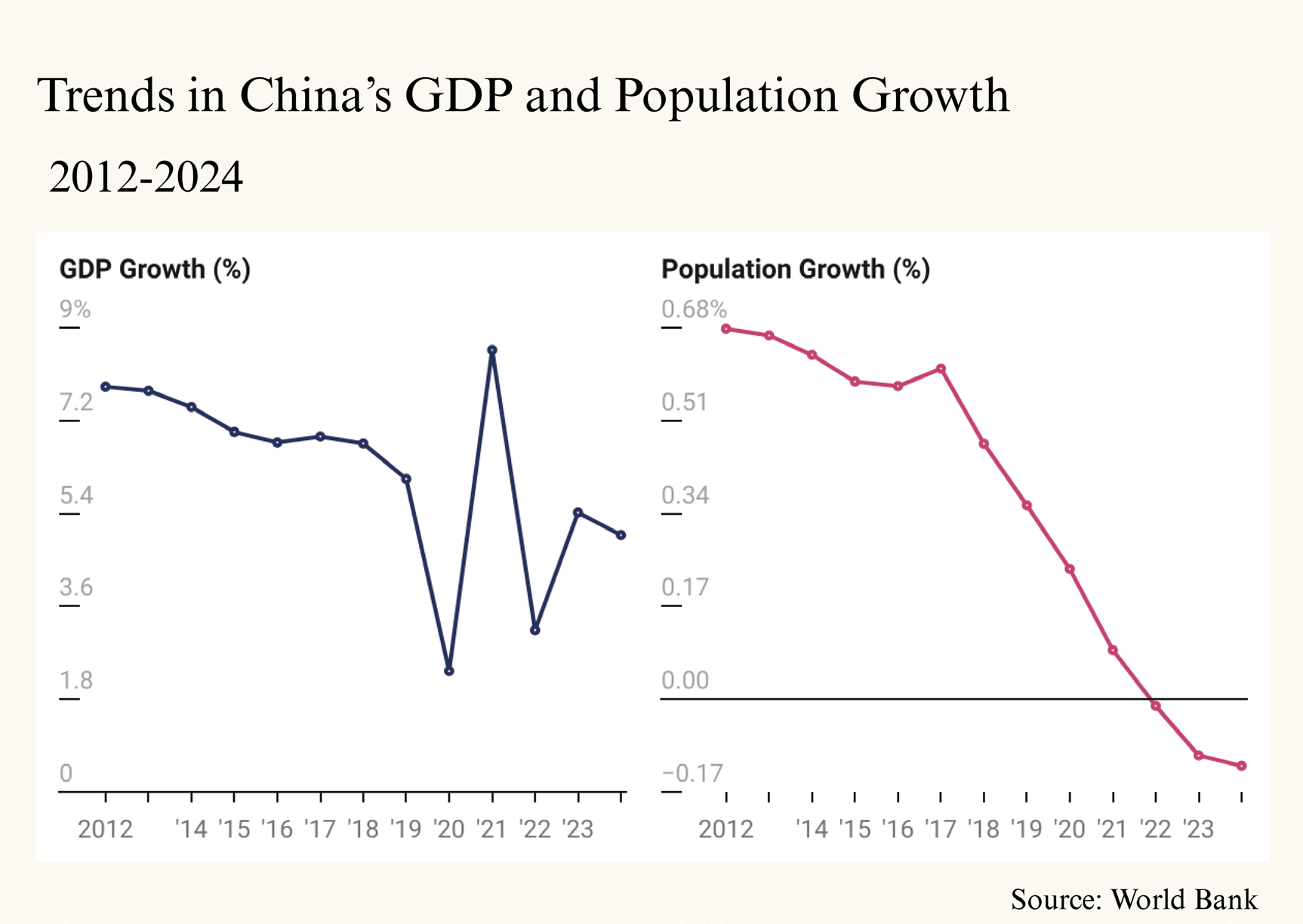
Economic and social stability - crisis and incipient existential economic and trade and investment unbearable.
Taiwan military intervention - indications are toward military engagement as the hawks in the United States will have us believe, though there is no clarity from the Chinese state. Looking at the state of the Chinese economy, it might be deferred.
International isolation due to human rights violations in China on the minority population.
Succession is not clear and might lead to the confusion as it did post Mao Zedong’s death.
Overall Implications
Xi’s leadership embodies a departure from liberal democratic norms towards authoritarianism and state capitalism - all of which present challenges to the democratic model. He is now impacting countries beyond his border with dollars, technology, and military reform, making him one of the key leaders in dictating the geopolitical landscape - possibly in the 21st century.
Without an appointed successor and constitutional amendment to allow for indefinite rule, he appears to be in a position to lead the country through 2032 and beyond, ensuring that his policies will influence global markets and foreign relations for multiple years to come.